Short answer
Biohazard waste hauling is governed in layers. Federal DOT rules control how waste is sorted and packed. They also cover labels, shipping papers, driver training and reporting accidents. OSHA protects the workers who handle the waste. States set most of the rest. They decide what counts as regulated medical waste and who needs to register or hold a hauler permit. They also set tracking forms, storage limits and approved treatment. Local agencies can add rules for storage, sites and disposal.
Why there is no single national rulebook
Many people assume a federal agency licenses medical waste haulers the way it licenses airlines. For a short time, the country had something close to a national tracking system. EPA's 2024 medical waste page says the federal Medical Waste Tracking Act rules ended on June 21, 1991. Since then, state environmental and health offices have mostly regulated medical waste.
Since then, the rules have grown state by state. Some states run detailed medical waste programs. These include hauler permits, tracking papers and treatment standards. Other states lean more on general trash rules and federal shipping rules. The terms differ too. An item that is regulated medical waste in one state may be handled as regular trash in another.
Federal agencies still play key roles, above all DOT for anything moving on public roads. The result is a system in layers. Anyone who makes, hauls or receives medical waste needs to know which layer answers which question.
What the federal government still controls
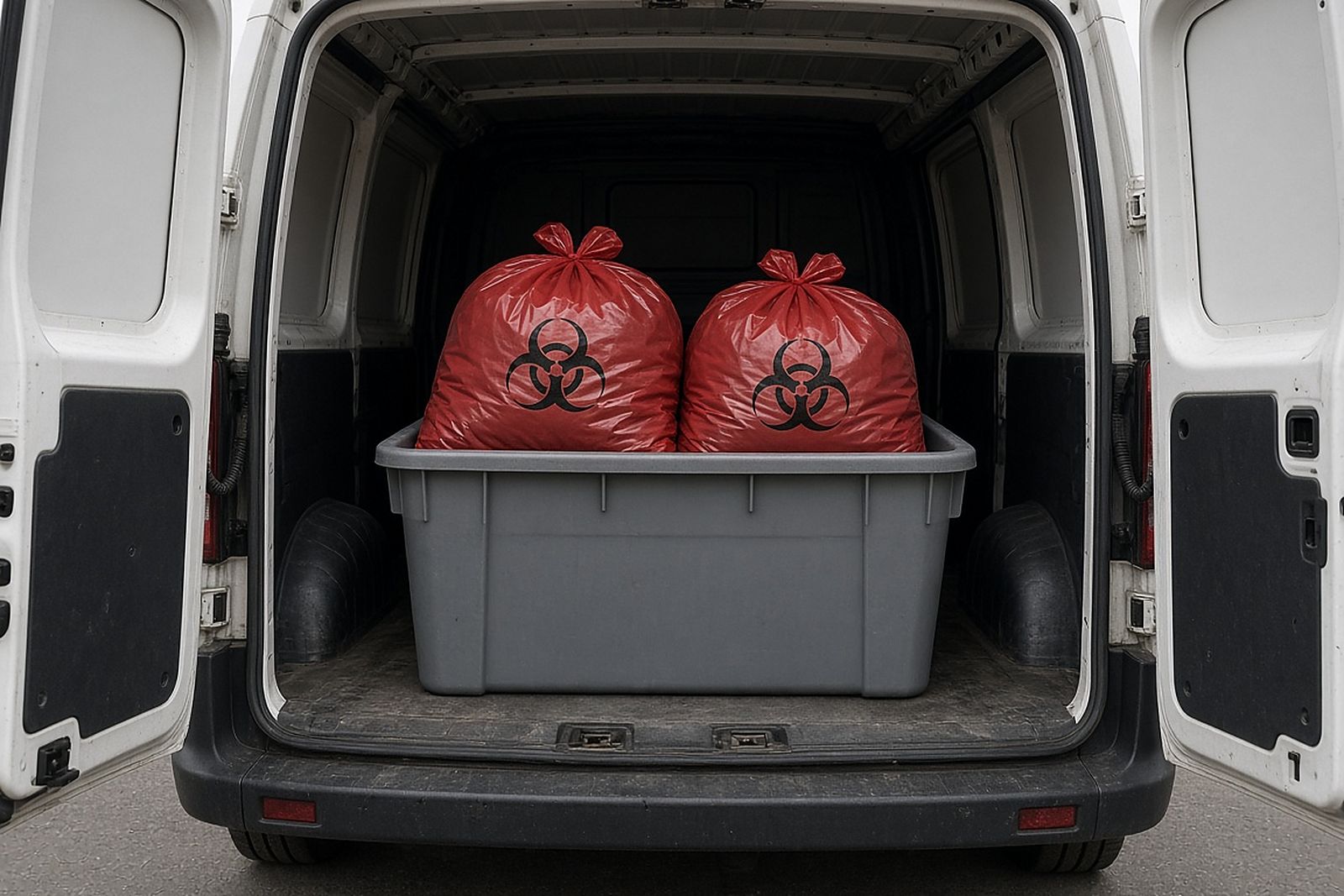
Once regulated medical waste is handed off to be shipped for business, the U.S. Department of Transportation's Hazardous Materials Regulations apply. Most medical waste ships under the listing for regulated medical waste. The rules spell out packing, marking, labels and shipping papers. They also set training for everyone who prepares or moves the waste.
Reporting accidents is a federal duty as well. Carriers must call in certain serious accidents, including those involving infectious substances. A written report is also due later.
Other federal agencies touch certain pieces. OSHA covers worker safety for the businesses that make the waste and for haulers. EPA regulates air pollution from medical waste burners. It also covers any hazardous chemical waste mixed in with the medical waste. The U.S. Postal Service sets its own terms for mail-back needle programs.
- DOT: sorting, packing, marking, labels, shipping papers, training and accident reports
- OSHA: worker protection for anyone who handles regulated waste on the job
- EPA: air pollution from waste burners and rules for hazardous chemical waste
- USPS: terms for mailing needles and small medical waste kits
- DEA: disposal of controlled drugs, which follows its own separate process
What do state medical waste programs typically decide?
States fill in most of the practical details, and each does it its own way. When you look into your state, look for answers to the questions below. The agency in charge is usually the state environmental department, the state health department or both.
Sign-up limits show how specific state rules can be. The Texas Commission on Environmental Quality's 2025 guidance says self-hauling makers of more than 50 pounds of untreated medical waste must register, with yearly fees of $100 to $500. The fee depends on volume. That rule applies only in Texas. Your state may use a different limit, a different fee or no sign-up at all.
State programs also change over time. Agencies revise terms, add electronic tracking or adjust fees. So a guide you downloaded a few years ago may no longer be right. Check the agency's website for the current version before you rely on it.
- How the state defines regulated or infectious medical waste
- Whether businesses that make the waste must register, and at what amount
- Whether haulers need a permit, registration or truck sticker
- Which tracking forms or waste shipping records go with each load
- Limits on storage time, temperature and place before pickup
- Approved treatment methods and permits for treatment sites
- How long waste makers and haulers must keep records
- Rules for small businesses that haul their own waste
Waste that crosses state lines
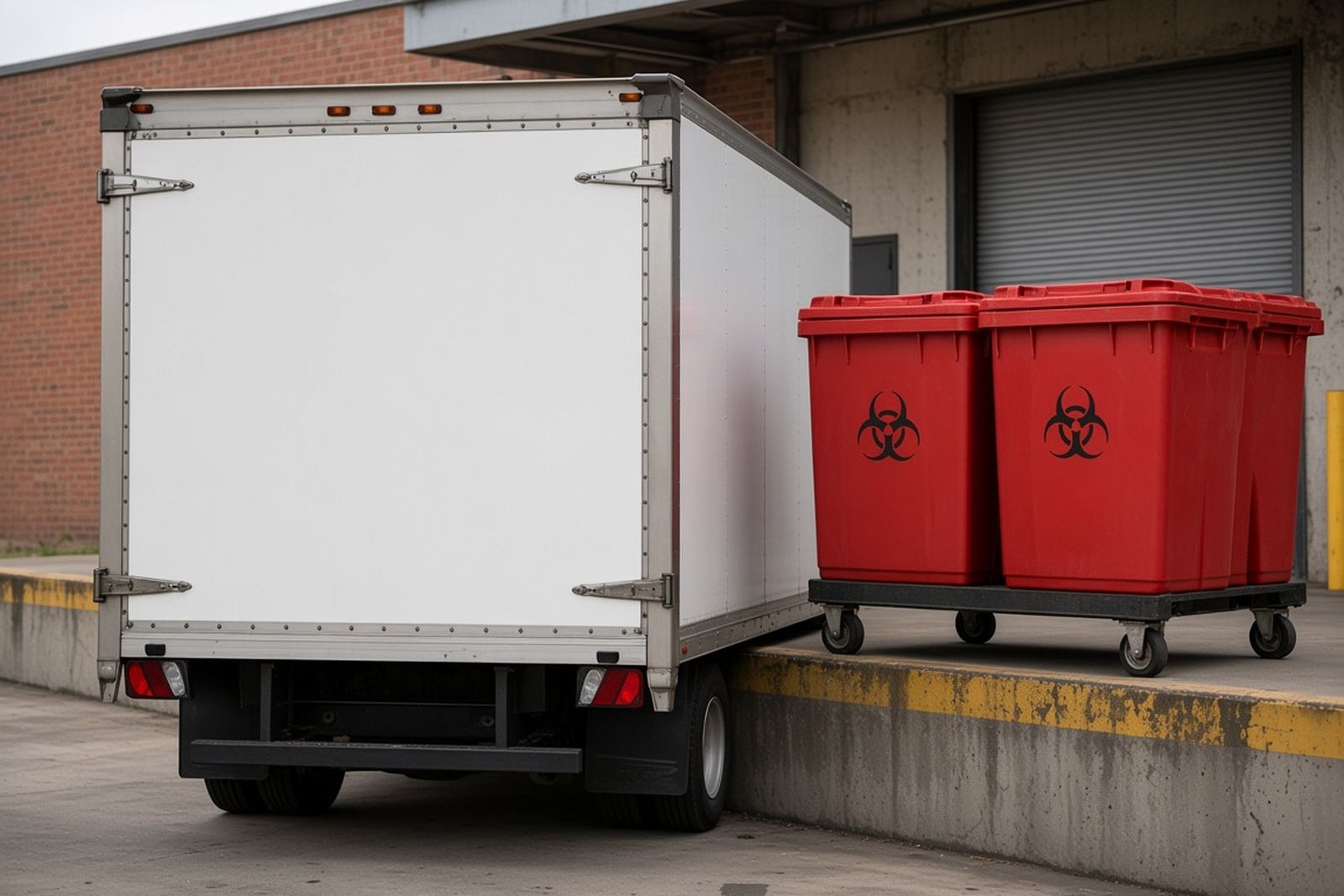
Many haulers move waste from one state to a treatment plant in another. When that happens, the load must meet federal DOT rules for the whole trip. In general, it must also meet the rules of the state where the waste was made and the state where it is treated.
The terms can clash. Waste that the starting state regulates may not be regulated where it ends up. Or the ending state may require its own tracking paper. Haulers sometimes need permits in each state they work in. A hauler that follows every rule in one state may not be allowed to work in the next.
If you make waste and are near a state border, ask your hauler where your waste is treated. Ask whether it holds permits in every state along the way. The answer should be specific. It should give the name and location of the site and the permits involved.
Local rules, landlords, and accreditors
County and city agencies rarely write their own medical waste hauling rules. But they affect the process around it. Local health departments may inspect places that make waste, such as tattoo studios, body art shops and funeral homes. Those checks often include waste storage and pickup records.
Fire codes can set terms for storage rooms that hold large amounts of waste that can burn. Zoning rules affect where transfer stations and treatment sites may operate. Local sewer offices decide whether any liquid waste may go down drains. Many ban it for blood and body fluids beyond small, accidental amounts.
City trash haulers and landfills may also refuse red bags or needle containers. They may do this even when a state would allow some treated waste to go to a landfill. That is a contract or site rule, not a law. But it can stop your trash pickup just as well.
Beyond government agencies, private rules often shape how waste is stored and moved. Business leases may limit where waste can be kept or when trucks can use a shared loading dock. Managers of medical office buildings sometimes require tenants to use an approved hauler. Or they may require waste to stay inside the suite until pickup.
Hospital and lab accreditation programs may review waste handling during their visits. Some insurers ask about waste practices when deciding on a policy. None of these are laws. But failing to meet them can cost you a lease, a contract or coverage.
Keep a short list of these private rules next to your list of legal rules. That way, a change in hauler or storage room does not accidentally break a promise you made in a contract.
Special waste streams
Drug waste, trace chemo waste, body tissue waste and controlled drugs can each fall under separate federal or state programs. Some drugs are hazardous waste under EPA rules. Controlled drugs follow DEA disposal rules. Trace chemo waste is often handled apart from red-bag waste. That is because some states prefer or require burning it.
Household needles are another special case. Rules for home users are usually different from those for businesses. Many towns offer drop-off boxes, pharmacy take-back or mail-back programs. A business that collects needles from the public, such as a pharmacy or a syringe services program, may count as a waste maker or collection point under state law.
The highest-risk infectious materials are called Category A substances. They ship under stricter DOT packing and paperwork rules, and special carriers handle them.
Where the layers collide for mobile businesses
The layers are easiest to see in a business that moves across them. Think of a mobile blood-draw or home health service. Its workers carry needle containers and small biohazard bags in company cars. They bring full containers back to a storage room at the office.
Federal DOT rules raise the first questions. Does that self-hauling fit any exception? How must the containers be packed and marked? What training do the workers need? OSHA's worker rules apply at every home visit and in the storage room.
At the state level, one state may require small businesses that haul their own waste to register. A nearby state may use a different definition and a separate tracking form. The county health department may inspect the storage room during a routine visit.
For a business working in two states, one practical answer is to stop carrying full containers across the state line. Use a hauler licensed in the nearby state for work there. Send home-state waste through the office for pickup by a registered hauler. That adds a vendor, but it closes a gap in following the rules that is hard to manage any other way.
How can you find the rules that apply to you?
Start with the agency that runs your state's medical waste program. It is often listed on the environmental or health department's website. Look for a guide for waste makers, rules for haulers and any list of permitted treatment sites.
Then check your county or city health department for inspection rules. Ask your hauler which permits it holds and where your waste goes. Rules vary by state and county; verify with the local authority.
- Find your state's medical waste agency and read its guidance for waste makers
- Confirm whether you must register as a waste maker or as someone who hauls your own waste
- Ask your hauler for its state permits and treatment site
- Check local health department inspection rules
- Review federal DOT packing and training rules for anything you ship
- Keep records for the longest time any rule that applies requires