Short answer
PPE for biohazard waste transport technicians should come from a written hazard assessment of each task on the route and at the plant. Most crews need puncture-aware gloves, eye and face protection for leaks, fluid-resistant clothing, safety footwear, and high-visibility gear for docks and roadsides. Chemotherapy, pathology, or high-risk infectious waste can call for additional protection. Gloves never replace careful handling of closed containers.
Start with a hazard assessment, not a gear catalog
It is tempting to order a case of gloves, a box of safety glasses, and some reflective vests and call it a PPE program. For waste transport crews, that approach tends to miss the exact moments when people get hurt: a lancet poking through a cardboard seam, a liner that splits while a box is lifted into a truck, or a driver backing into a narrow dock on a rainy morning.
OSHA's general PPE standard asks employers to assess the workplace for hazards, select equipment that protects against them, and document that assessment in writing. The written certification names the workplace evaluated, the person who did it, and the date. For a hauler, the workplace is not one building but every stop on a route, the truck itself, and the treatment or transfer facility.
Doing the assessment first also helps you spend money wisely. Some tasks need heavy, specialized protection, while others need only basic gloves and eyewear. Matching gear to tasks keeps technicians protected without burdening them with equipment that makes the job harder and gets taken off when no one is watching.
Walking the route: what technicians meet
Walk the route with a notepad before you pick a single product. Watch how drivers enter each generator's building, where the waste is stored, how full the containers are, and how the boxes are carried to the truck. Then watch the unloading process at the plant.
Most assessments turn up a similar list, although the weight of each hazard varies by customer type. A route full of large hospitals looks different from one serving dental offices, tattoo studios, and veterinary clinics.
- Sharps that penetrate overfilled or damaged containers
- Leaks and drips from liquid or saturated waste
- Heavy boxes, full carts, and awkward lifts from floors or shelves
- Slips on wet docks, ramps, and truck beds
- Vehicle traffic at loading docks and roadside stops
- Heat inside trailers in summer and cold storage rooms year round
- Chemical exposure from disinfectants used on spills
- Special waste streams such as trace chemotherapy or pathology waste
Plant-side hazards
Include the plant side as well. Workers who unload trucks, tip carts, feed autoclaves, or wash reusable containers face steam, hot surfaces, noise, and spray from pressure washers, in addition to the waste itself. Their PPE list will look different from a route driver's, and it should be assessed on its own terms.
Which hand and arm protection fits waste handling?
Hands take the most contact, so glove selection deserves real thought. Disposable nitrile gloves protect against fluid contact but tear easily and offer little resistance to needles. Cut-resistant or puncture-resistant gloves add a barrier against broken glass and some sharps, though no glove material reliably stops a hollow-bore needle.
Many crews wear nitrile gloves under or over a reusable cut-resistant glove, then discard the nitrile layer between stops. Long cuffs or disposable sleeves help when drivers reach into carts or lift boxes against their forearms.
Waste technicians handle the containers that hold used needles, lancets, and scalpels from every kind of generator on the route, which is why the assessment should pay close attention to how full and how intact containers are at pickup.
The strongest protection is procedural. Technicians should never compress bags, push down on box lids, or reach into containers. A container that cannot be closed properly should be flagged for the generator to fix, not forced shut.
Planning for leaks and splashes
Properly packaged waste should not leak, but real routes involve torn liners, wet box bottoms, and liquids that were never meant to be in the bag. The assessment should assume that some pickups will involve fluid contact and equip technicians accordingly.
Safety glasses with side shields cover routine handling. A face shield, fluid-resistant apron or coverall, and shoe covers belong in the truck's spill kit for when a container fails. Absorbent, a registered disinfectant, spare liners, and an overpack box round out the kit.
Write down who makes the call to overpack a leaking container and when a driver should refuse a pickup instead. A clear rule removes pressure from the driver, who may otherwise feel obliged to take a dripping box to stay on schedule.
Lifting and loading
Musculoskeletal strain is one of the most common injuries in any hauling work, and medical waste is no exception. Federal packaging rules help by limiting bag sizes and how heavy a bag placed in a cart may be when filled.
Those limits reduce the load, but they do not remove it. Safety footwear with slip-resistant soles, gloves with good grip, and hand trucks or lift gates do more for back and foot injuries than any other item in the kit.
Traffic and temperature
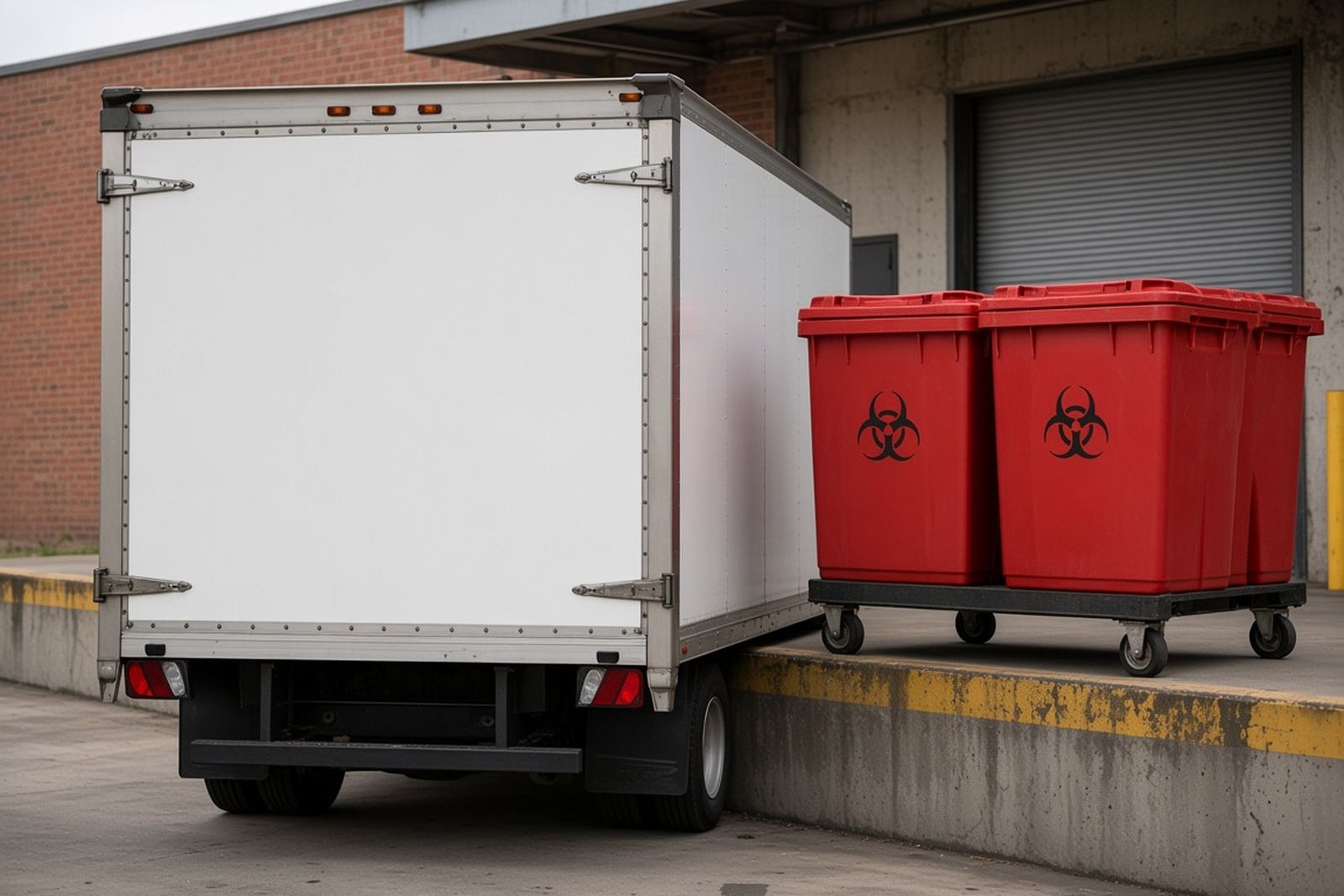
Loading docks and curbside stops put technicians near moving vehicles. High-visibility vests or shirts, good lighting on the truck, and a habit of setting wheel chocks and cones protect drivers while they work at the tailgate.
Temperature belongs in this section too. A trailer parked in afternoon sun can become very hot, while some generators keep waste in refrigerated rooms. Breathable fluid-resistant layers, cooling breaks in summer, and insulated gloves for cold rooms help technicians keep their protective gear on rather than peeling it off because they are uncomfortable.
Do chemotherapy, pharmaceutical, or pathology wastes change the plan?
Yes. Some routes include waste streams with chemical hazards layered on top of infectious ones. Trace chemotherapy waste can carry residue of hazardous drugs, so many programs specify gloves tested for use with chemotherapy drugs and add gowns for handling damaged containers.
Pathology waste may contain preservatives that release vapors if a container breaks. Pharmaceutical waste can include products that are hazardous under chemical waste rules and must be kept separate. Each of these streams deserves its own line in the hazard assessment.
The highest-risk infectious materials are classed differently for shipping. Waste containing a Category A infectious substance does not travel as ordinary regulated medical waste. Those shipments come with specialized packaging and handling procedures, and technicians should not handle them without training specific to that material.
How should PPE be put on, taken off, and discarded on the road?
Removal is where many exposures happen. Technicians should learn a consistent sequence: remove the outer gloves first, then face and eye protection by the straps, then gowns or aprons by rolling them inward, and finally inner gloves.
Hand hygiene matters even at stops without a sink. OSHA's bloodborne pathogen rules allow an antiseptic hand cleanser when handwashing facilities are not feasible, followed by washing with soap and water as soon as possible. Every truck should carry sanitizer, towelettes, and a supply of clean gloves.
Used disposable PPE is waste too. Keep a designated, labeled container in the truck for contaminated gloves and gowns rather than tossing them into the cab or a public trash can.
Handling a problem stop, step by step
The assessment should translate into a routine drivers can follow when a stop is not clean: a box with a darkened, damp corner, or a sharps container whose lid is propped open by a cluster of syringes.
The driver pulls a fresh pair of nitrile gloves over the cut-resistant pair, puts on safety glasses and a disposable apron, and asks the generator's staff to close and replace the overfilled sharps container before accepting it.
The damp box goes inside an overpack container without being opened. The driver wipes the floor with a registered disinfectant and notes the issue on the pickup record, then removes the outer gloves and apron, drops them in the truck's waste bin, and sanitizes before touching the steering wheel.
Those steps add a few minutes to the stop. They also head off a possible needlestick and a fluid exposure, and they give the generator useful feedback about packing before the next pickup.
What should a generator ask about a hauler's PPE program?
You do not manage your hauler's employees, but you do share a loading area with them. Ask to see their written hazard assessment, how they handle leaking or overfilled containers, and whether they carry spill kits on every truck.
It also helps to agree on what your own staff will wear when they bring waste to the dock. If your employees and the driver both handle the same boxes, their gloves and eye protection should be at least as protective as the hauler's, since the hazards do not change when the container changes hands.
Their answers also tell you what they expect from your packaging, which can prevent rejected pickups.