Short answer
In biohazard waste transport, cleaning removes visible soil and residue from reusable carts, truck cargo areas, and loading docks, while disinfection applies a registered product at its label contact time to inactivate pathogens on those cleaned surfaces. Neither step applies to the waste itself, which stays sealed until a treatment facility sterilizes or destroys it. Knowing which step happens where helps you judge a hauler's hygiene.
Where cleaning and disinfection fit in waste transport
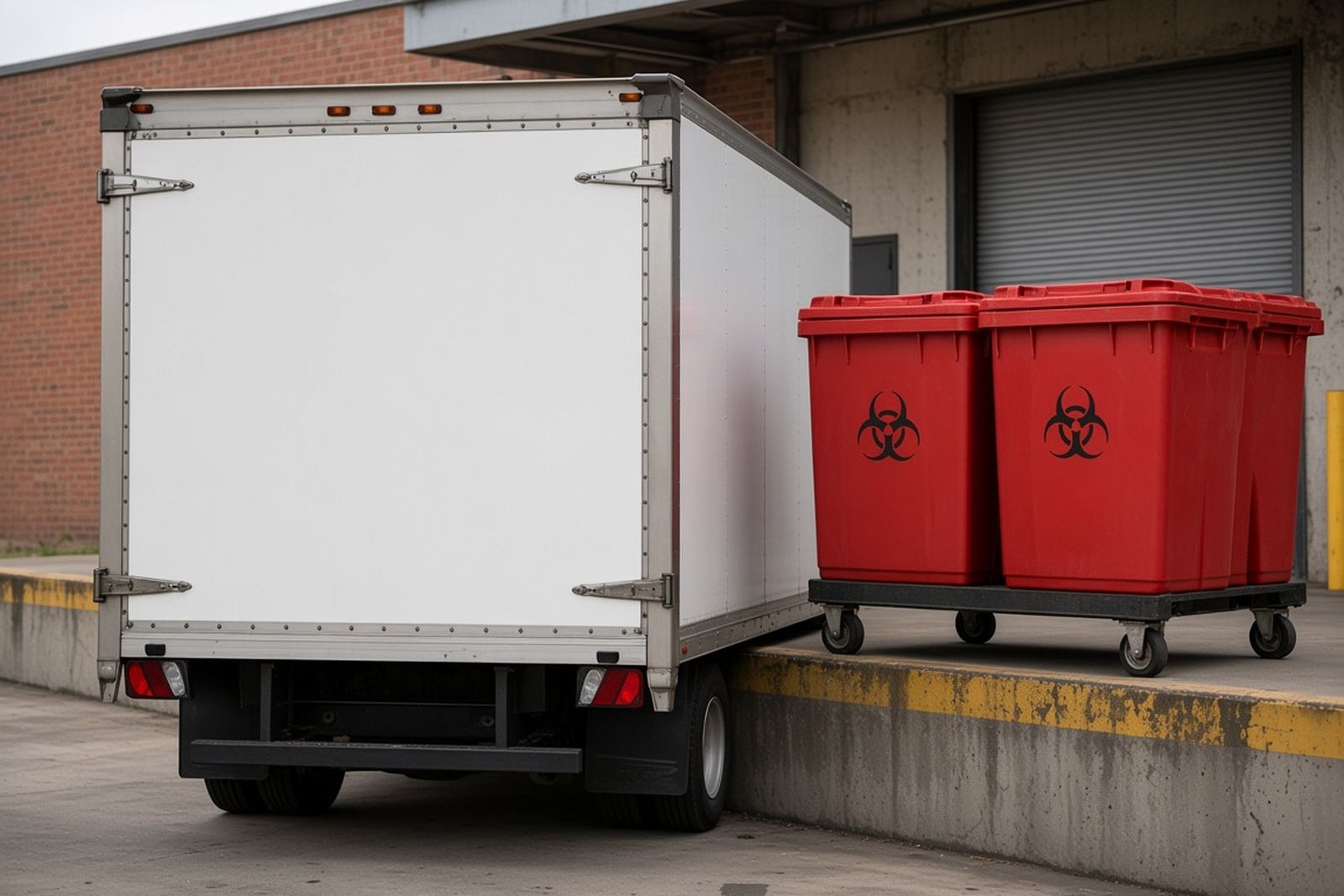
Most people think of cleaning and disinfection as things that happen at a cleanup site. In waste transport, they happen in a different place: on the equipment and surfaces that carry and touch the waste. That includes reusable carts and tubs, truck cargo areas, loading docks, storage rooms, and any spot where a container leaked.
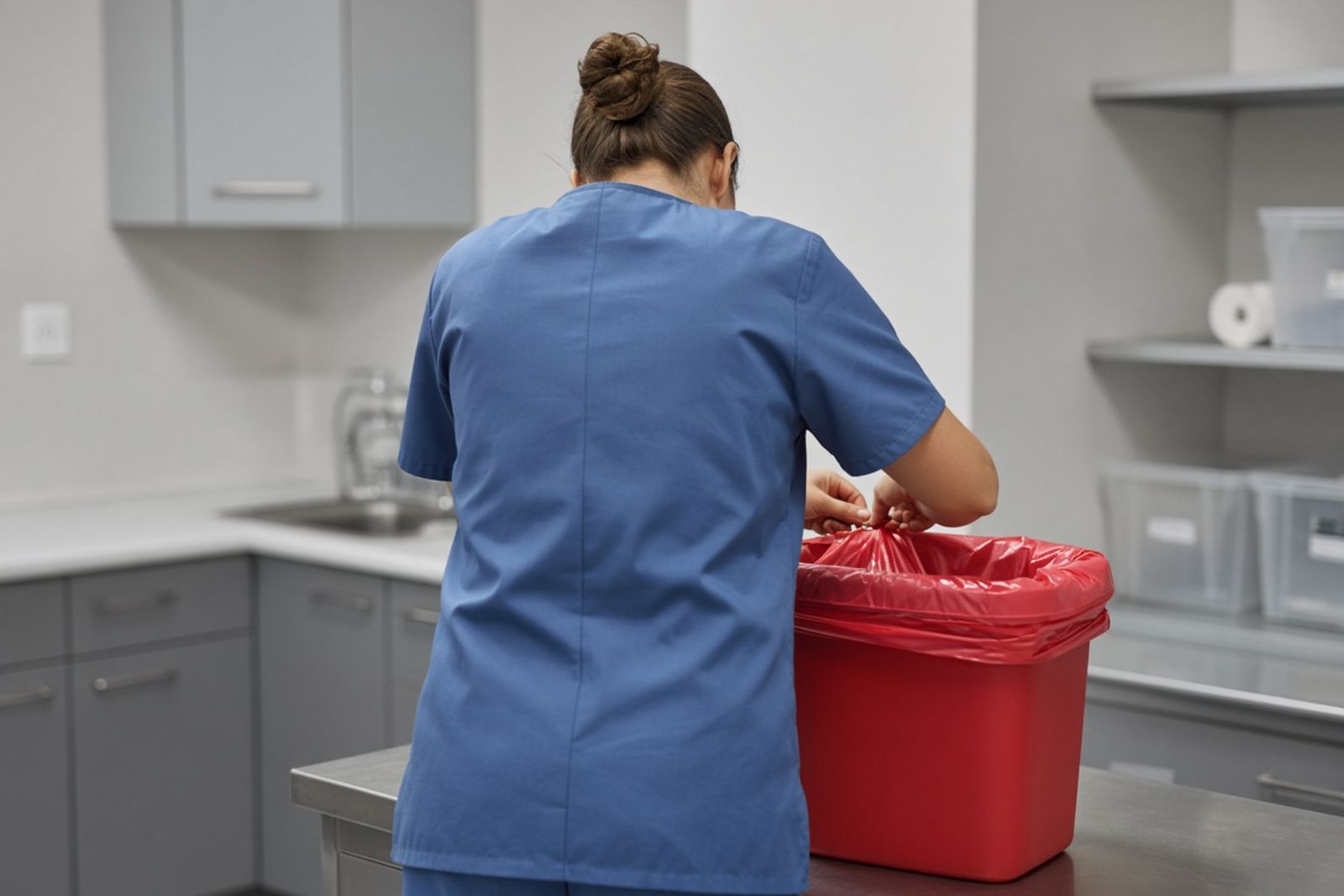
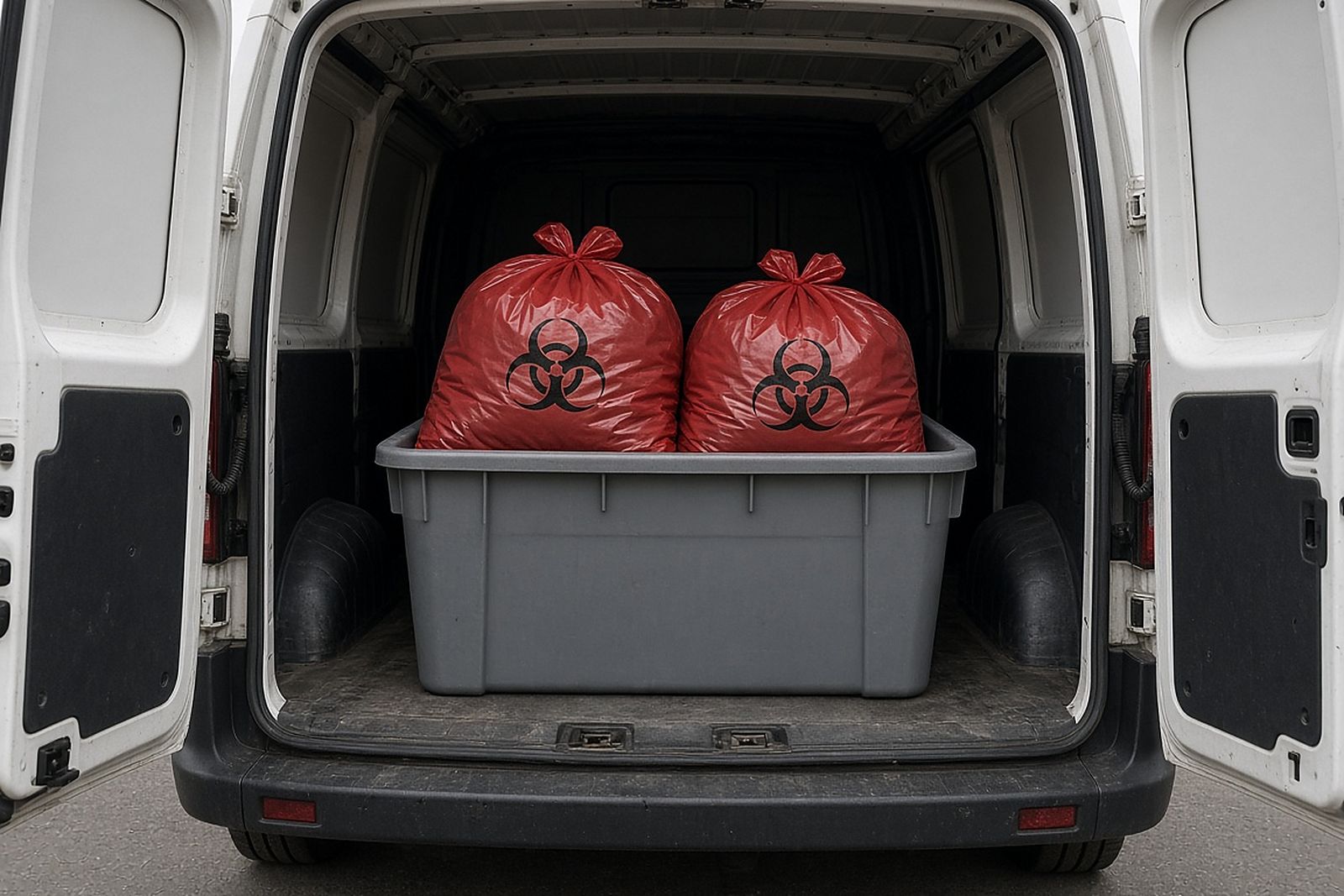
The waste itself is handled differently. Once regulated medical waste is packaged, the goal is to keep it sealed until it reaches a treatment facility. No one is supposed to open bags or boxes along the way to clean or disinfect what is inside.
That creates three separate ideas. Cleaning and disinfection protect people from contamination on surfaces. Treatment, which happens at the end of the route, inactivates or destroys the pathogens in the waste. A good hauler understands all three and knows where each one belongs.
The distinction matters for anyone who shares the route: the staff who stage containers, the drivers who load them, and the workers who unload carts at a transfer site or plant. Each of them touches surfaces that may carry residue from a leak somewhere upstream.
Cleaning: carts, trucks, and docks
Cleaning is the physical removal of soil, residue, and any leaked material from a surface. For a reusable cart, that might mean emptying loose debris, scrubbing the inside with a detergent, and rinsing. For a truck cargo area, it might mean sweeping, removing spilled material with absorbents, and washing the floor and walls.
Cleaning comes first because dirt and organic residue interfere with disinfectants. A film of dried fluid can shield microorganisms from the product and reduce its effectiveness. Disinfecting a surface that has not been cleaned is like painting over dust: the result looks finished but does not hold up.
Cleaning also has its own value. Removing residue reduces odors, prevents buildup, and makes it easier to spot damage such as cracks in a cart or tears in a truck liner that could let future leaks escape.
- Remove any loose debris or leaked material with absorbents
- Scrub surfaces with an appropriate detergent
- Rinse or wipe away cleaning residue
- Inspect for cracks, holes, or damage
- Dispose of cleaning waste as regulated waste where required
What does disinfection add to that routine?
Disinfection uses an EPA-registered product to kill or inactivate specific microorganisms on a cleaned surface. The label tells the user which organisms it works against, how to dilute it, and how long the surface must stay wet to work.
For waste transport, disinfection matters on anything that could have been touched by leaked fluid or by hands that handled contaminated containers. That includes the interior of reusable carts, truck floors and walls, handles, lift gates, and the floors of storage rooms and docks.
Materials and contact time
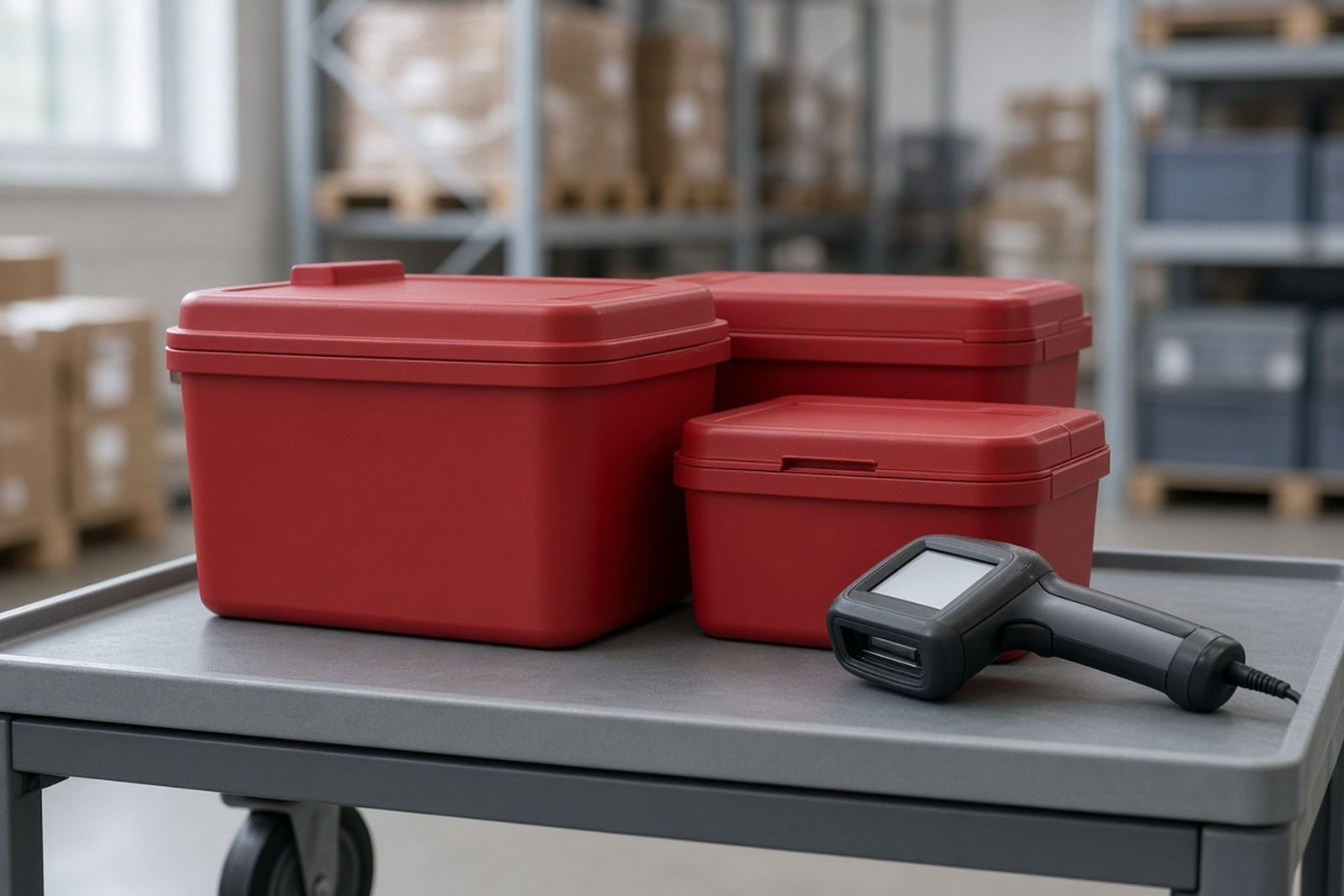
Materials make a difference. Federal transport rules require reusable wheeled carts for regulated medical waste to be made of metal, rigid plastic, or fiberglass. Those hard, nonporous materials are chosen partly because they can be cleaned and disinfected effectively between uses.
Contact time is where shortcuts tend to happen. On a busy route, it is tempting to spray a cart and move on. A cart that is wiped dry seconds after spraying may look fine but has not met the label directions, which means the surface was cleaned but not truly disinfected.
Treatment vs disinfection
Treatment is what happens to the waste itself at a permitted facility. Common methods include autoclaving, which uses pressurized steam, incineration, and other approved technologies. Treatment is designed to inactivate pathogens throughout the waste, not just on a surface.
Disinfection works on surfaces and has limits. It cannot penetrate a sealed bag of soiled materials or the inside of a sharps container. That is why transport rules focus on containment: keep the waste sealed and intact until it reaches equipment designed to treat it.
Sometimes people ask whether they can disinfect waste to make it ordinary trash. In most cases, that is not how the system works. State rules usually specify which treatment methods are approved and who may operate them. Check with your state's medical waste program before treating or disposing of regulated waste on your own.
Treatment facilities also clean and disinfect their own equipment, loading areas, and carts after unloading. So the full chain includes surface care at your site, on the truck, and at the plant, with treatment of the waste happening only once, at the end.
What happens when a container leaks during transport?
Leaks are where cleaning and disinfection become urgent. A split bag or a damaged box can release fluid onto a truck floor, a dock, or a storage room. The response follows the same order: contain, clean, then disinfect.
A trained driver or handler puts on protective equipment, places the damaged container into a larger overpack, and uses absorbent material to collect any free liquid. The area is then cleaned to remove residue and disinfected with a registered product at its label contact time. The waste from the cleanup is packaged as regulated waste.
Serious incidents may also trigger reporting. Under PHMSA rules at 49 CFR 171.15 published in 2024, hazmat incidents that kill or hospitalize someone, close a major artery for an hour, or involve infectious substances must be reported by phone within 12 hours. A hauler should have written procedures for leaks and for deciding when a report is required.
Good practice at a transfer site
A transfer site is where trucks drop off carts before the waste moves to a treatment plant, and where empty carts come back from the plant for reuse. A well-run site handles those returning carts the same way every day.
Each returning cart goes to a wash bay. A worker in gloves, eye protection, and a fluid-resistant apron removes any loose debris and scrubs the interior with a detergent. After rinsing, the worker applies a registered disinfectant and lets it sit for the full contact time listed on the label, then lets the cart drain and dry. Carts with cracks are tagged and pulled from service.
Once a week, the same process is used on truck cargo areas. When a driver reports a leak, the affected truck skips its next route until the cargo area is cleaned and disinfected. The site keeps a log of each cleaning, and customers can ask to see it. None of this touches the waste itself, which stays sealed until it reaches the treatment plant.
How can I tell if my hauler cleans and disinfects properly?
You can learn a lot by watching the equipment that shows up at your door. Reusable carts and tubs should arrive clean inside, without residue, odor, or stains. Trucks should have cargo areas that look maintained, with no visible spills.
Ask the hauler how it cleans reusable containers, which disinfectant it uses, and how often truck cargo areas are cleaned. Ask what happens when a driver finds a leaking container. A professional hauler will have clear answers and, often, written procedures.
If a cart arrives dirty, do not use it. Contact the hauler and ask for a replacement. Accepting a contaminated container puts your staff at risk and may suggest broader problems in the hauler's process.
You can also ask whether the hauler's drivers carry spill kits and disinfectant on every truck. A driver who can handle a small leak on the spot, following a set procedure, prevents a minor problem from spreading into your hallway or parking lot.
Your own premises
Generators have responsibilities too. The area where you store waste before pickup should be easy to clean, kept separate from food and break areas, and cleaned and disinfected on a regular schedule and whenever a spill occurs.
Use the same order: remove any leaked material with absorbents, clean with a detergent, then disinfect with a registered product following its label. Train staff to wear gloves and eye protection during this work and to package cleanup materials as regulated waste where required.
Keep a simple log of when the storage area was cleaned. It helps you stay consistent, and it shows inspectors that you take the routine seriously.
Choose storage surfaces with cleaning in mind. Sealed concrete, vinyl flooring, and metal shelving are far easier to clean and disinfect than carpet, bare wood, or cardboard. A small change to the storage area can make the whole routine faster and more effective.
The short version
Cleaning removes residue from surfaces. Disinfection inactivates pathogens on cleaned surfaces. Treatment inactivates or destroys pathogens in the waste itself at a permitted facility. In waste transport, the first two protect the people and equipment along the route, while the third happens at the end. A hauler that can explain all three, and shows it through clean equipment, is one you can trust with your waste.