Short answer
Before biohazard waste is packaged and moved, assess ten risks: needlesticks, leaks and splashes, misclassified or mixed waste, overfilled or heavy containers, load shifting and vehicle crashes, heat and storage delays, unsecured staging areas, untrained handlers, weak spill and incident plans, and documentation gaps. Each risk has a practical control, and most are settled at the point where waste is first packaged, long before the truck arrives.
Why review safety risks before a pickup
Most injuries and releases in medical waste handling happen at predictable moments: when a container is filled, closed, lifted, loaded, or opened at the wrong time. Reviewing risks in advance lets you fix problems while the waste is still under your control.
This matters whether you run a clinic with weekly pickups, manage a property after a biohazard cleanup, or coordinate waste for an event. The hazards are similar, even if the volume differs.
Use the ten risks below as a checklist for your own site and as questions for your transporter.
Think of the waste's journey as a series of hand-offs: from the person who generated it, to whoever packages it, to the staging area, to the driver, to the treatment facility. Every hand-off is a chance for a mistake, and every one can be made safer with a simple habit or a clear rule.
- 1. Needlesticks and other sharps injuries
- 2. Leaks, splashes, and torn bags
- 3. Misclassified or mixed waste
- 4. Overfilled, overweight, or awkward containers
- 5. Load shifting and vehicle crashes
- 6. Heat and long storage times
- 7. Unsecured staging areas
- 8. Untrained or unsupervised handlers
- 9. Weak spill and incident plans
- 10. Missing or incomplete documentation
Risk 1: needlesticks
Risk 1 is sharps injuries. They happen when needles are placed in bags instead of rigid containers, when sharps containers are overfilled, when lids are not locked, or when someone pushes waste down to make room.
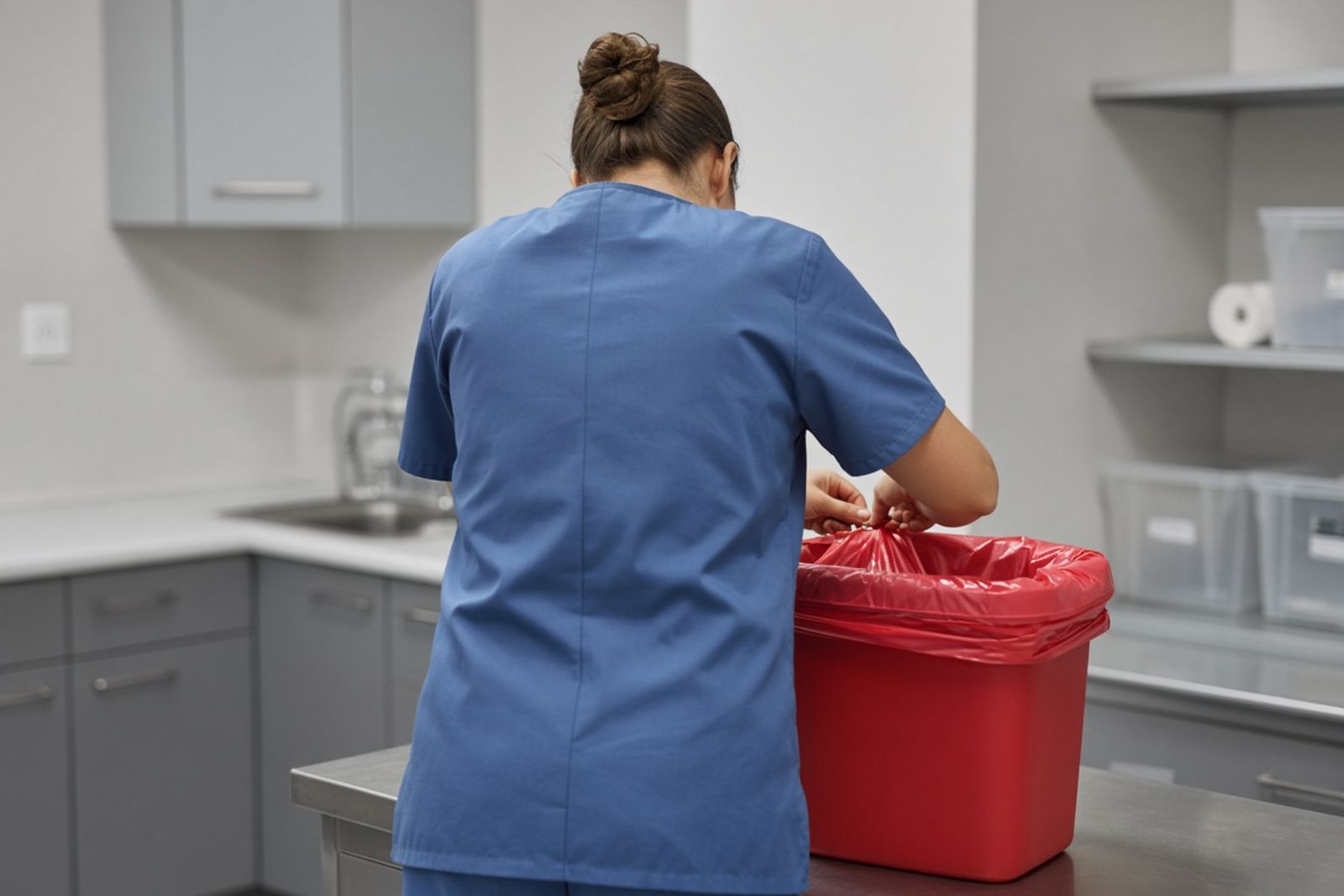
Controls are straightforward: use puncture-resistant containers sized for the volume, stop at the fill line, lock lids before transport, and never reach into containers or compress bags by hand.
If a needlestick or splash does happen, wash the area right away with soap and water, flush eyes or mouth with water, report it to a supervisor, and seek medical evaluation promptly. Employers covered by workplace bloodborne pathogen rules should have a written post-exposure procedure ready before it is ever needed.
Risk 2: leaks and torn bags
Risk 2 is leaks. Thin bags tear, damp materials soak through cardboard, and liquids spill when containers tip. Use rated liners, add absorbent for damp contents, keep liquids in sealed leak-resistant containers, and check that the outside of every box is dry before pickup.
Risk 3: misclassified or mixed waste
Not all waste belongs in the same box. Regulated medical waste, pharmaceuticals, chemical waste, radioactive materials, and ordinary trash follow different rules. Mixing them can create chemical reactions, send waste to a facility that cannot treat it, or expose handlers to hazards they were not expecting.
Higher-risk infectious substances also carry stricter packaging and identification requirements than routine medical waste. A transporter must know what is in the load before accepting it.
Tell your transporter exactly what you generate and ask for guidance on separating streams. If something unusual turns up during a cleanup, such as chemicals, medications, or unknown containers, keep it out of the biohazard boxes and ask how it should be handled.
Labeling ties classification to safety. A box marked correctly tells the driver, the facility, and emergency responders what is inside. A box with no label, or the wrong one, leaves every person down the line guessing.
Risk 4: heavy and awkward containers
Risk 4 is physical strain. Overfilled boxes and heavy carts cause back and shoulder injuries, and they are more likely to split or tip. Awkward shapes, such as bundled carpet or mattress sections from a cleanup, are hard to lift safely and can press waste against the handler's body.
Follow weight and fill limits, use carts, dollies, or liftgates, and break large items into manageable pieces when that can be done safely. Keep walkways clear between the staging area and the truck.
Risk 5: shifting loads and crashes
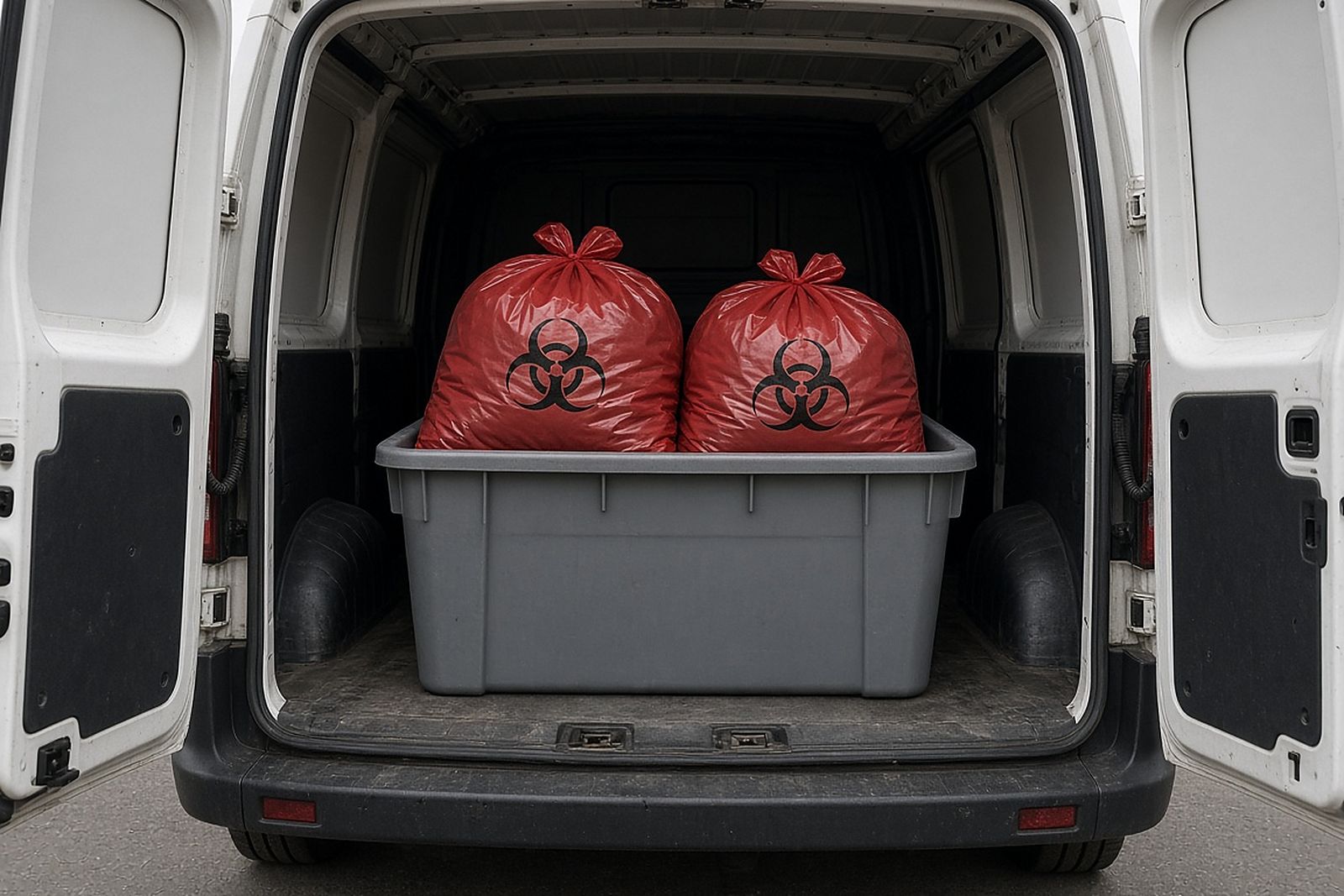
Risk 5 is load movement. In a sudden stop or turn, unsecured containers slide, tip, and crush one another. In a crash, they may break open. Transporters should use straps, bars, or shelving to secure loads and should never carry waste in the passenger compartment. Ask how loads are secured in the vehicle that will serve your site.
Risk 6: heat and storage time
Organic waste decomposes, and heat speeds that up. Warm storage produces odor, weakens cardboard, and can attract pests. Long waits between pickups increase the chance of leaks and complaints.
State rules often limit how long waste can be stored and under what conditions. Plan pickup frequency so containers do not sit longer than allowed, and consider refrigerated storage if delays are unavoidable.
In hot weather, schedule pickups promptly after a cleanup rather than letting boxes wait over a weekend in a garage or storage unit.
Personal vehicles are a particular concern. Cars and pickup beds have no separation between cargo and passengers, no securement designed for waste containers, and interiors that are hard to disinfect if something leaks. That is one reason licensed transporters use dedicated, enclosed vehicles.
Risk 7: who can reach the waste while it waits?
Staged waste should never be accessible to the public, children, pets, or pests. An unlocked closet, a hallway, or an open garage invites curiosity and accidents.
Choose a secure area with a door that locks, away from foot traffic and food. The floor should be easy to clean if a leak occurs. Post biohazard signage if required, and limit access to trained staff.
After a residential cleanup, the remediation crew should either remove waste the same day or store it securely until pickup. Ask where it will be kept and who holds the key.
Pests are part of the storage risk. Flies, rodents, and other animals are drawn to decomposing material, and they can damage packaging or carry contamination away from the staging area. Tight lids, sealed boxes, and prompt pickup keep them out.
Risk 8: handler training
Training determines whether people recognize hazards and follow procedures under pressure. Federal hazmat rules require training for employees who prepare or transport regulated materials, and new hires may work only under direct supervision until their training is complete.
Ask your transporter how drivers are trained and supervised. For your own staff, make sure anyone who packages waste knows the fill limits, closure methods, labeling, and what to do after an exposure.
Refresher training matters too. Procedures drift over time, especially at sites where waste is generated only occasionally.
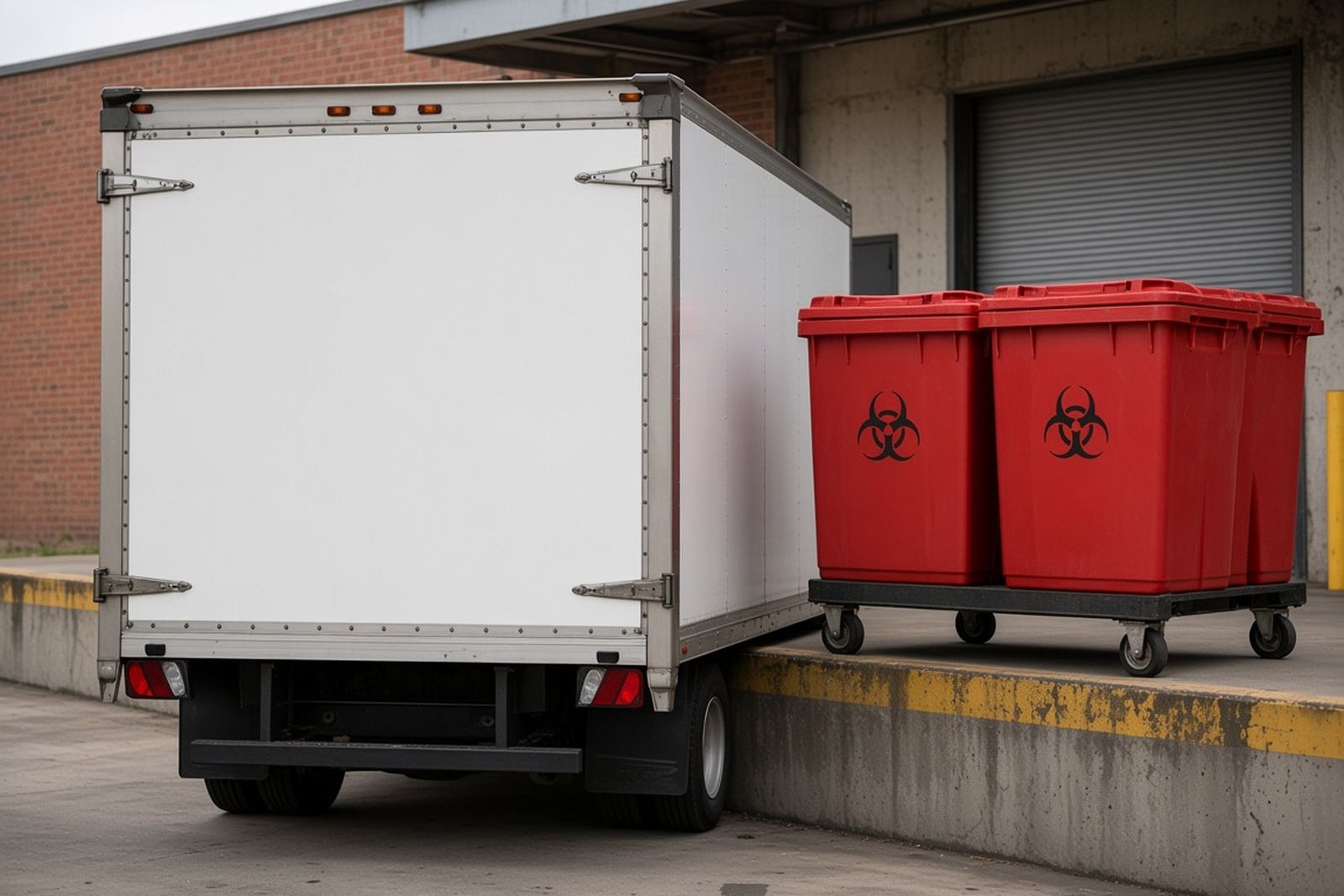
Theft and tampering are rare but real. Sharps and pharmaceutical waste in particular can attract unwanted attention, so keep those containers out of sight and never leave waste on a curb, loading dock, or porch for a driver to collect later.
Risks 9 and 10: incident plans and paperwork
Risk 9 is a weak incident plan. Every transport vehicle should carry a spill kit and emergency information, and drivers should know when to contain a spill themselves and when to call for help. Serious incidents may trigger reporting duties to federal and state agencies.
Your site needs a plan as well. Keep a spill kit near where waste is packaged and stored, and make sure staff know how to clean a small leak, report a needlestick, and seek medical follow-up.
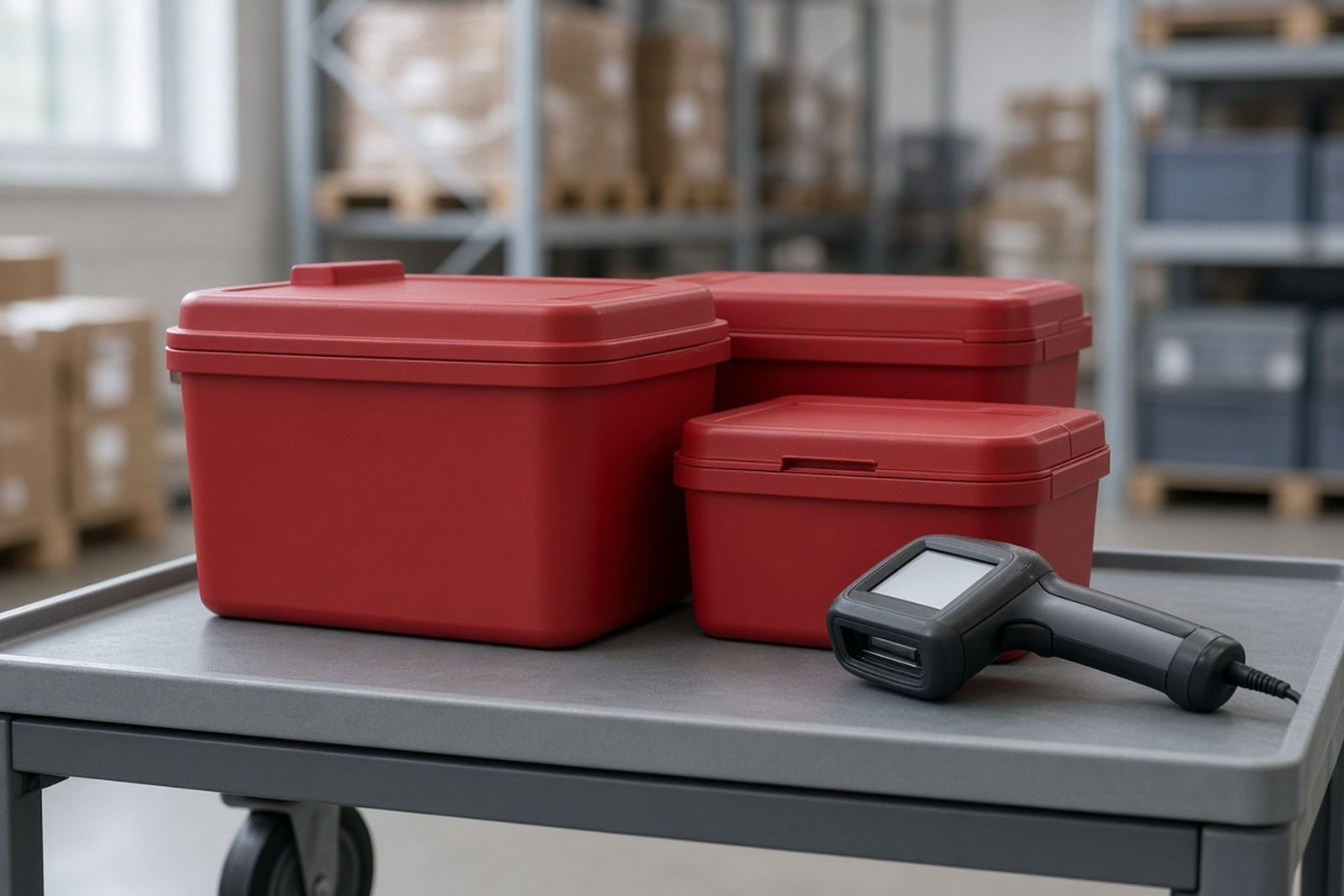
Risk 10 is missing paperwork. Without a manifest or tracking record, there is no way to confirm the waste reached treatment or to trace a problem. Check that every pickup is documented, keep copies, and follow up if the completed treatment record does not arrive.
A risk review before one pickup
One illustrative case shows how the review works in practice. A property manager arranges cleanup of a rental unit after a tenant is found deceased. The remediation crew removes a mattress, carpet, pad, and several drywall sections, and also finds a shoebox of used syringes and a bag of expired prescription medications.
Before pickup, the crew lead reviews the risks. The syringes go into a rigid sharps container, which is locked before it goes in an outer box. The medications are kept separate from biohazard waste because they follow a different disposal route. Carpet and pad are cut into sections that fit rated boxes without exceeding weight limits, and absorbent is added where materials are damp.
Because the pickup cannot happen until the next morning, the boxes are stored in the unit's locked bedroom with a sign on the door, and the manager holds the only other key. The next day, the transporter secures the load with straps, the crew lead and driver sign the manifest, and the manager receives a copy.