1Recognizing regulated material in a working business
Regulated medical waste is sometimes called biohazard or infectious waste. It includes items soaked with blood or other body fluids that can carry disease. It also includes used sharps, such as needles, and cultures and stocks from labs. Body tissue and some animal waste from vet care count too. It does not include every item that touched a patient. A dry glove, an empty wrapper, or a paper towel with a small dried spot is often normal trash under most state rules. Rules vary by state and county, though. Learn what belongs in the red bag or sharps container and what does not. That keeps costs sensible. It also prevents two mistakes. Putting regulated waste in the trash breaks the rules. Treating normal trash as regulated wastes money.
2Generator duty and who has authority over the rules
The business that makes the waste is called the generator. The generator is legally responsible for sorting, packing, labeling, storing, and tracking it correctly. That duty does not pass to the driver, the hauler's office, or the treatment plant. Several layers of government set the rules. The U.S. Department of Transportation (DOT) controls how the waste is packed and shipped on public roads under 49 CFR. OSHA's blood safety rule at 29 CFR 1910.1030 controls how workers are protected while handling it. State environmental or health agencies, and sometimes counties, set storage limits, hauler registration, and treatment permits. When you are unsure about a specific rule, ask the state or local authority.
3Containment from the point of generation to the dock
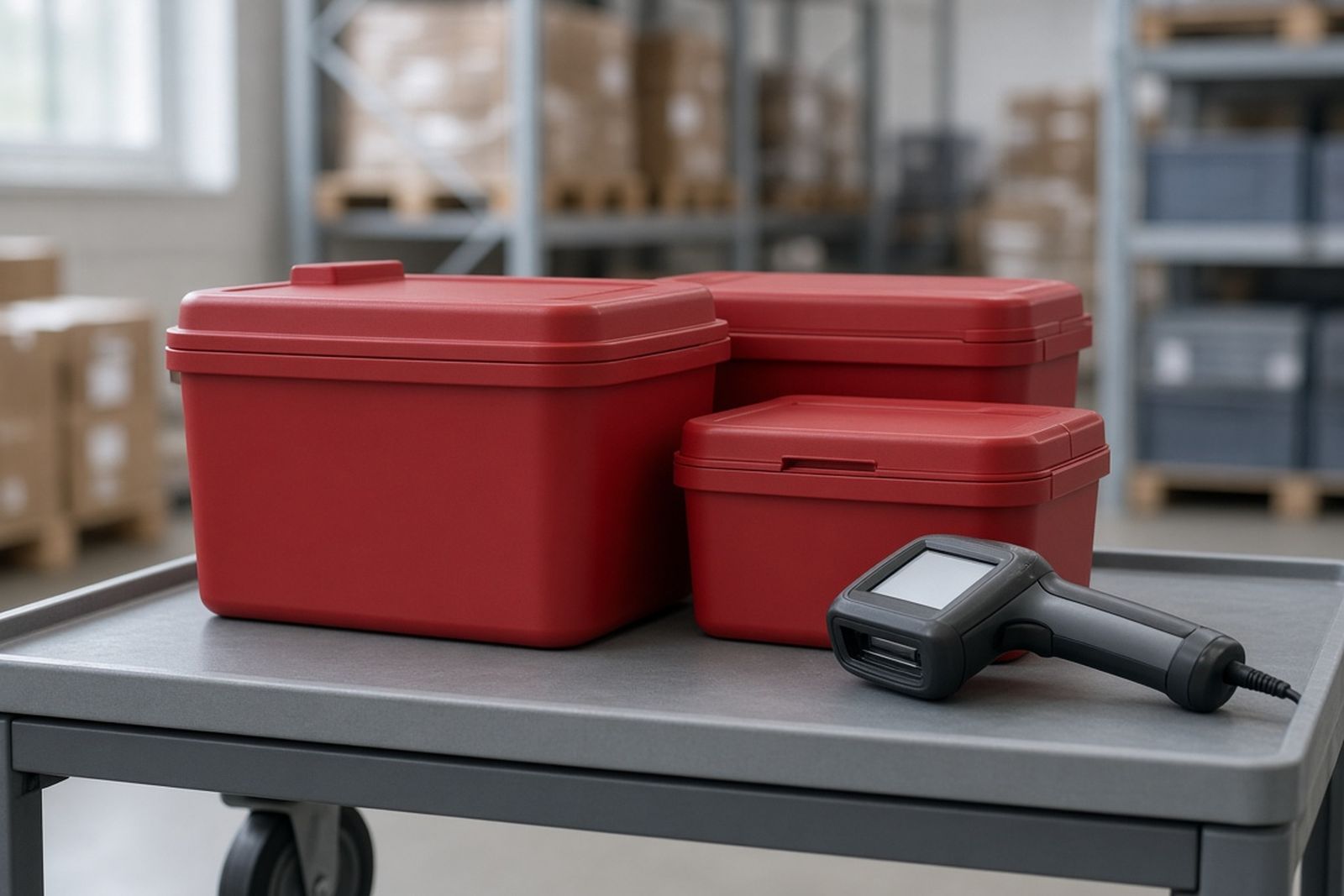
In this field, keeping waste contained is about packing, not plastic sheets and barriers. Sharps go into hard, closable containers that needles cannot poke through. Never fill them past the marked line. Soft regulated waste goes into red or biohazard-labeled bags. Those bags then go into hard outer containers or boxes approved for shipping. Body tissue often needs its own stream. It may need to be kept cold if it will wait for pickup. Containers must be closed when not in use and marked with the biohazard symbol. Store them where the public, pests, and weather cannot reach them. Most states limit how long waste can be stored, and the limits vary. So a business must know its own clock and schedule pickups to stay inside it.
4Cleaning versus decontamination in waste-handling areas
Cleaning removes visible dirt and debris from a surface with detergent and water. Decontamination goes further. It uses a disinfectant meant to bring germs down to a safe level. In a waste storage room or a loading area, both matter. Say a bag leaks. The floor and any containers it touched need cleaning to remove the material. Then they need a disinfectant made for bloodborne germs. Use it as the label says, and keep it wet for the time listed. Reusable carts and tubs returned by the hauler should be checked too. If they are soiled, treat them the same way. Wiping a spill with a dry towel and moving on leaves a hazard for the next person.
5The waste path from pickup to permitted treatment
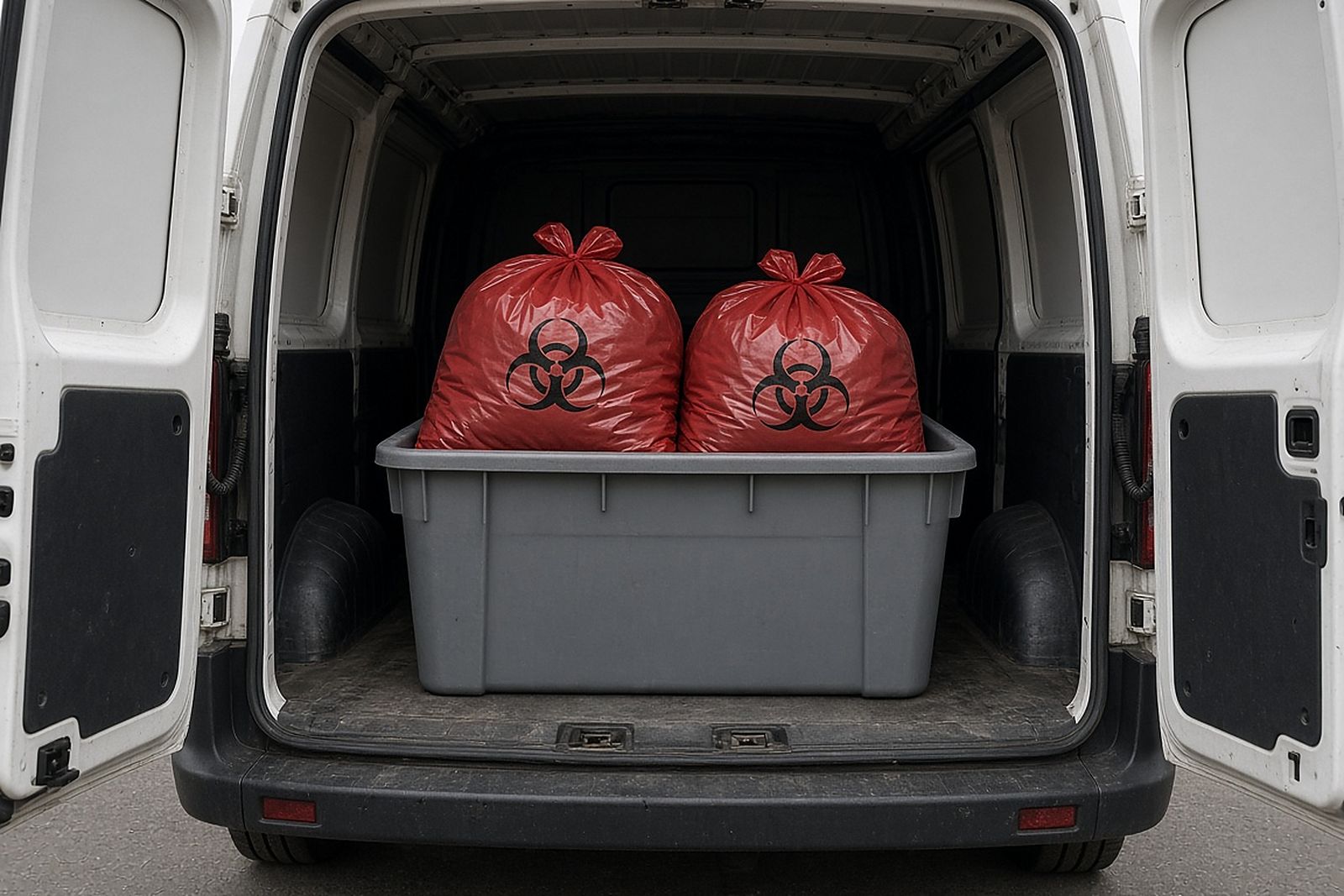
Once packed, regulated waste is picked up by a hauler that is registered or licensed to carry it in your state. The driver checks labels and container condition and loads the waste. The driver also fills out shipping papers or a waste shipping record. It lists who made the waste, who is hauling it, what it is, how much there is, and where it is going. The load goes to a permitted treatment site. There it is steamed under pressure, burned, or handled by another approved method until it is no longer infectious. After that, what is left usually goes to a landfill. Mail-back programs work the same way. They use a mail carrier and approved packaging instead of a route truck. At every step, someone signs. Those signatures form the chain of custody that comes back to you.
6Documentation, verification, and closing the loop
Your file for each pickup should hold three things. First, the waste shipping record or tracking form signed at pickup. Second, the copy returned after the treatment site accepts the load. Third, any certificate of treatment or destruction the site issues. Checking means making those papers match. The number and type of containers that left your site should match what the site received. Watch for missing return copies, counts that do not match, or a site you have never heard of. Any of those is a reason to call the hauler. Keep records for at least as long as your state requires. Keep them longer if your insurer or lawyer advises it. During an inspection, a neat, complete file is the fastest way to show your waste went where it should.