Free biohazard waste transport tool
Biohazard Waste Transport Cost Range Estimator
Set the affected area, surface types, severity and extras to see an educational cost range and the factors that move it.
Medical waste hauling is priced differently from trauma cleanup. So this estimator asks you to think about volume and frequency, not just floor space. The area and surface questions still matter for cleanup customers who need soiled materials boxed and hauled. But for a business with ongoing waste, the main cost drivers are different. They are how many containers you fill and what types of waste they hold. They also include how often a truck must stop and how far your site is from the route and the treatment site. Sharps, body tissue, and drug waste usually cost different amounts than general regulated waste. The tool turns your answers into a learning range. It lists the factors that pushed the range up or down.
Some extras change the picture. These include after-hours pickup, several storage spots on one campus, odor complaints from stored body tissue, and removing built-in fixtures during a cleanup. The estimator treats each as a separate change so you can see its effect. The result is not a quote. It cannot account for state fees, minimum stop charges, container rental, or fuel surcharges your provider may add. Use the range to decide whether route service, on-call pickup, or a mail-back program deserves a closer look. Then ask for written prices that list each item, so you can compare providers on equal terms. A provider that will not list items makes comparison impossible, and that tells you something too.
How to use it
- 1If you are a cleanup customer, enter the area and surface types involved. If you have ongoing waste, set them to the storage room where containers wait.
- 2Choose the level that matches your container volume and waste types, from occasional sharps to regular body tissue waste.
- 3Turn on extras such as after-hours pickup, several storage spots, odor concerns, or fixture removal to see how each shifts the range.
- 4Review the listed cost drivers and copy the written-quote checklist to send to haulers you are considering.
Prefer to ask a person?
Your request is sent to the follow-up inbox. A coordinator can reply by email. Not for emergencies; call 911 first if anyone is in danger.
Estimate a cost range
Biohazard Waste Transport cost range estimator
Educational only. Real pricing needs an on-site assessment and a written scope. Insurance coverage is decided by your carrier, not by this tool.
Educational range: $3,000 – $5,000
Scaled from a published reference range (typical biohazard cleanup project, national) reported by Fixr (2025). Your region, provider and the actual findings on site can move the real number outside this range.
Cost level: Mid range.
None of the big cost multipliers are selected. Minimum service charges, travel and waste fees still apply.
Ask every quote to itemize labor, containment, product, waste disposal, verification sampling, and any rebuild, and to state what is excluded.
A worked example
Imagine a made-up vet clinic that recently added a surgery suite. Before that, it filled a few sharps containers and one box of regulated waste each month. A route truck picked them up on a fixed schedule. Now the clinic makes body tissue waste from surgeries. Its current hauler's treatment site cannot accept that waste. So the clinic has started storing it in a fridge while it looks for options. The practice manager opens the estimator. She sets the area to the small storage room. She picks mixed surfaces because the room has tile and a rubber mat. She chooses a middle level, since there is a new tissue stream on top of steady general waste. She turns on the extra for several rooms, because the surgery suite and the treatment area each have their own containers. She adds odor treatment, because the cold-stored waste has worried staff. The tool gives a range. It flags tissue handling, a second treatment site, and more frequent pickups as the main drivers. With that list, she asks two haulers for written quotes. She asks them to price each waste type, the stop charge, container supply, and any extra fee for the second site separately. She also notes that she must confirm her state's storage rule for tissue waste with the local authority before she picks a pickup schedule.

Numbers behind cost estimator decisions
- 437 gallons
Reusable wheeled carts for regulated medical waste are limited to a nominal 1,655 liters (437 gallons) and must be metal, rigid plastic or fiberglass.
Read with care: Reusable sharps containers have separate 2-to-40-gallon limits.
Source: DOT PHMSA (49 CFR via Cornell LII) (2024)United States, 49 CFR 173.197
- $0.30-$0.80 per pound
Regulated medical waste disposal typically costs $0.30 to $0.80 per pound, with small physician practices paying $75 to $200 per month.
Read with care: Published by a disposal vendor; regional pricing and minimum fees vary.
Source: MedPro Disposal (vendor pricing guide) (2026)United States, vendor pricing guide dated March 2026
- 12 hours
Hazmat incidents that kill or hospitalize someone, close a major artery for an hour, or involve infectious substances must be reported by phone within 12 hours.
Read with care: A written DOT Form 5800.1 is separately due within 30 days.
Source: DOT PHMSA (49 CFR via Cornell LII) (2024)United States, hazmat carriers
- 30 years
OSHA requires employee medical records related to bloodborne pathogen exposure to be kept for the duration of employment plus 30 years.
Read with care: Applies to exposure records, not waste manifests.
Source: OSHA (2024)United States employers covered by the standard
These figures are public research and agency data, not this network's own job records. Keep each number with its population, year and limits; none of them predicts cost, timing or outcome at a specific property.
Cost Range Estimator questions for biohazard waste transport
Why does the estimator ask about square footage for a waste service?
Cleanup customers often need soiled flooring, furniture, or drywall boxed and hauled as regulated waste. The amount of material grows with the size of the area and the type of surface. For businesses with ongoing waste, the area input matters less than the level setting. That setting stands in for container volume and the mix of waste types.
Does the range include container purchase or rental?
No. Containers are priced many ways. Some haulers bundle them into a route fee. Others bill per box or per rented tub. Ask each provider whether containers, liners, and sharps units are included. If not, ask what each costs, so the quote you compare covers the whole program. Bundled pricing can hide these costs.
How does pickup frequency change the estimate?
More frequent stops raise the yearly cost. But they may lower storage risk and let you use smaller containers. Less frequent pickups lower stop charges. But you need enough secure storage to stay within your state's time limit. The estimator shows frequency as a driver, so you can weigh the trade-off instead of looking at one number.
Can I use this to compare a mail-back program with route service?
Yes, roughly. Run the estimator with your expected volume. Then compare the range to the full price of mail-back kits that include the container, shipping, treatment, and returned records. Mail-back often suits small, uneven volumes. Route service tends to fit steady producers. But confirm with your state that you are allowed to use mail-back.
What should be in a written quote that the estimator cannot show?
Ask for the rate per container for each waste type and the stop or minimum charge. Ask about fuel or regulatory surcharges and container supply terms. Ask for the name of the treatment site for each stream. Ask how waste shipping records and treatment certificates come back to you. Ask about any fee for rejected or rescheduled pickups. Contract length and cancellation terms belong in the quote too.
Does the estimate cover pharmaceutical or chemical waste pickups?
No. The estimator works from the affected area, how far the mess spread, surface types, and a few extras. It does not work from each separate type of waste. Drug, hazardous chemical, and dental amalgam waste are often priced separately. A different vendor may handle them. If you make those types of waste, ask for separate quotes. Add them to your budget along with the estimator's range, so you see the full picture.
How should a practice with several locations use the estimator?
Run it once for each site. Container mix, pickup frequency, and route location can differ even within one group. Then compare the site ranges side by side to see which location drives most of the cost. That view helps when you ask haulers for a combined proposal. You can check whether a bundled price really beats pricing each site on its own.
Related community polls
Every count is a real visitor vote; nothing is seeded or padded. One vote per poll per device, and you can change your answer.
How does your business get medical waste off site now?
Which part of your waste program is most frustrating?
Other biohazard waste transport tools
Provider Vetting Checklist
Fifteen questions to ask any remediation provider, a readiness score, and a copyable list of what is still unanswered.
OpenInsurance Claim Organizer
A guided checklist from finding the policy to tracking the carrier decision, with a printable summary of where the claim stands.
OpenFirst 24 Hours Planner
Tell the planner a few facts about the situation and get an ordered list of who to call, what not to touch, and what to photograph.
OpenWaste & Disposal Classifier
Five questions about the material point to the likely waste category and which authority to confirm the rules with.
OpenDIY or Call a Pro? Risk Check
Eight yes-or-no questions that produce a risk level and explain when professional help is the safer choice.
OpenMore on biohazard waste transport
Biohazard Waste Transport services
See how medical waste hauling works, from packing and shipping records to permitted treatment, before you sign with a hauler.
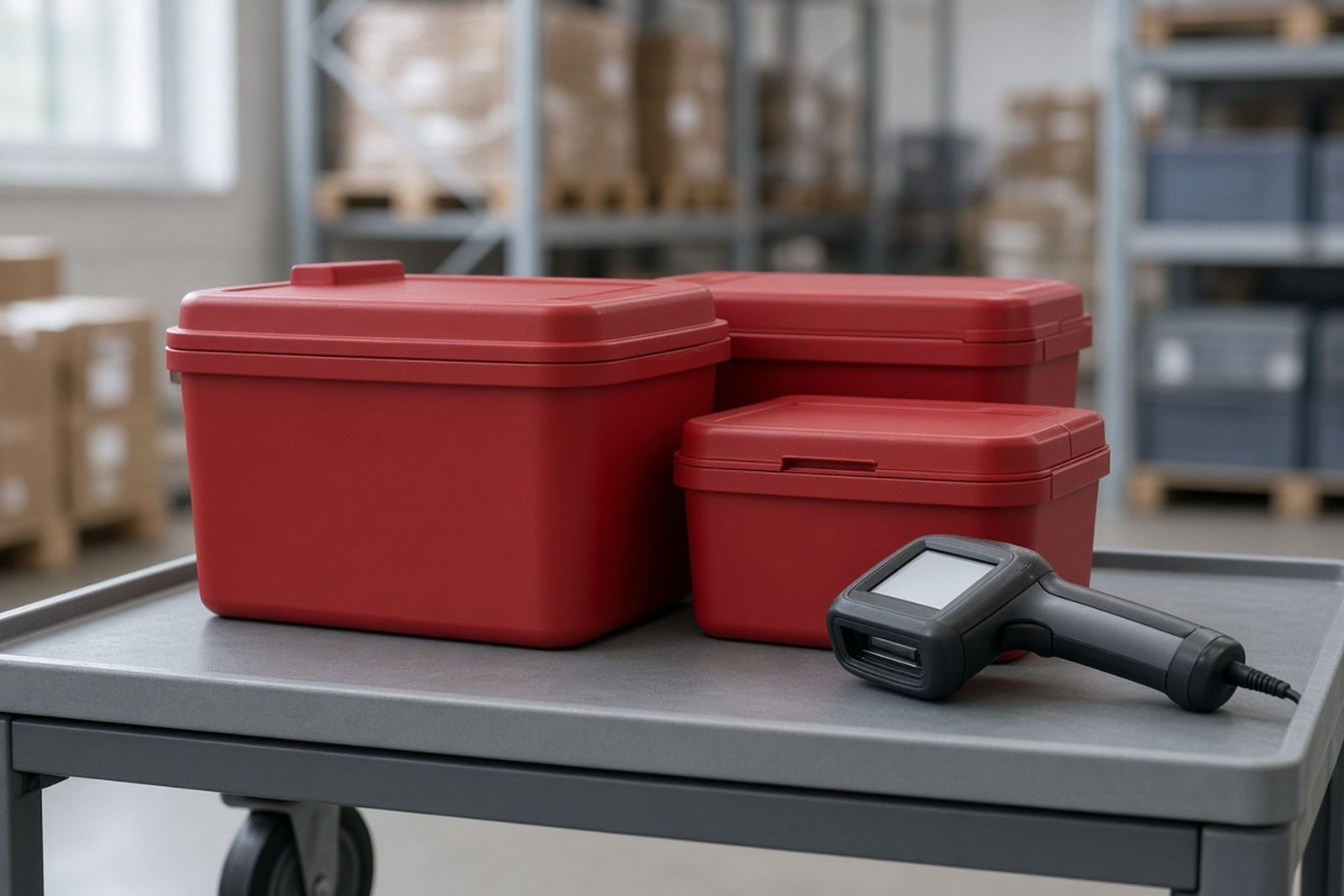
Costs explained
What drives the price, published cost ranges, and how to read a written quote line by line.
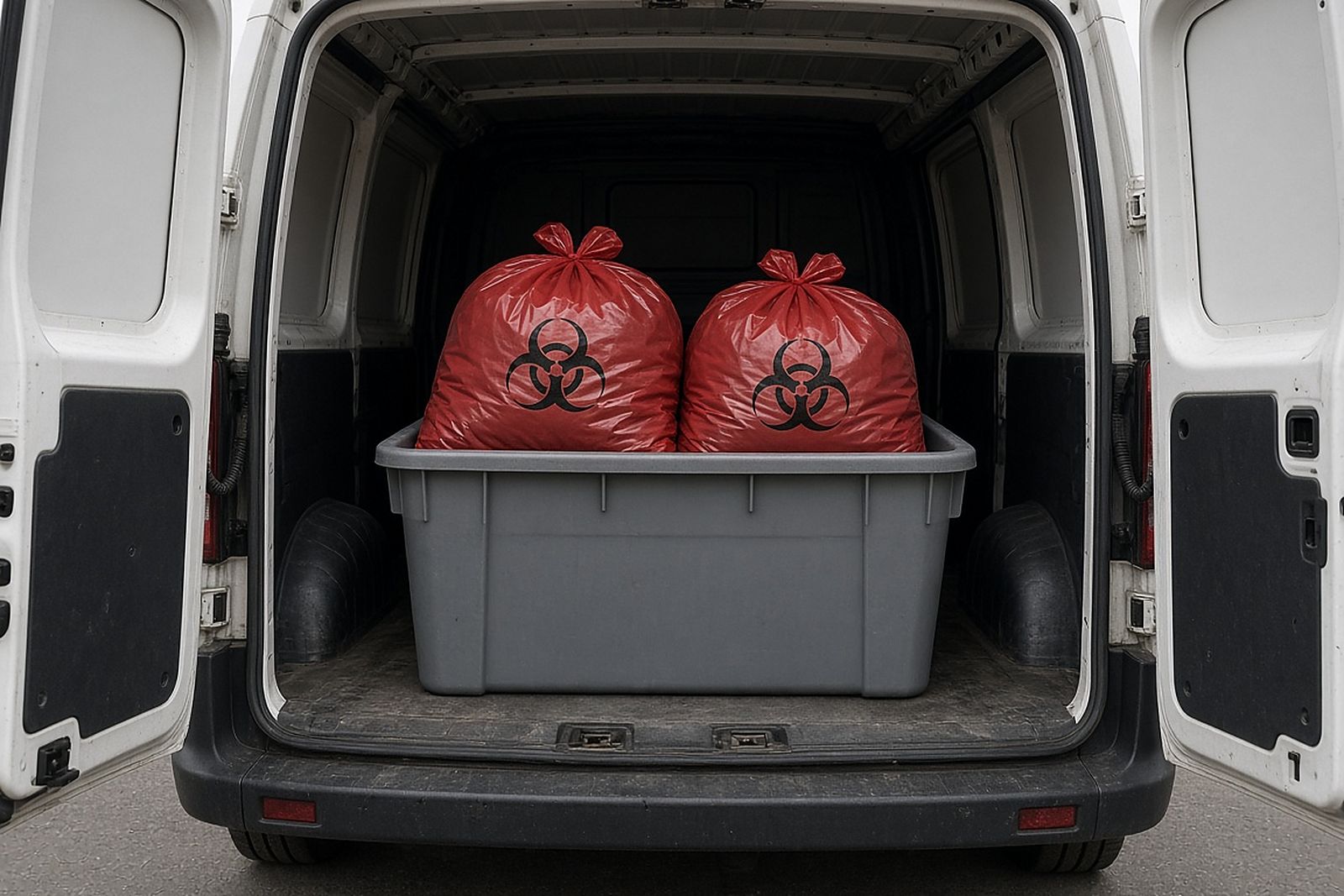
Insurance and payment
Which policies may respond, how to document a claim, and what to do if coverage is denied.
Community polls
See how other clinics, studios, labs, and property owners handle pickup schedules, paperwork, and hauler choices. See where opinions differ from the written rules.
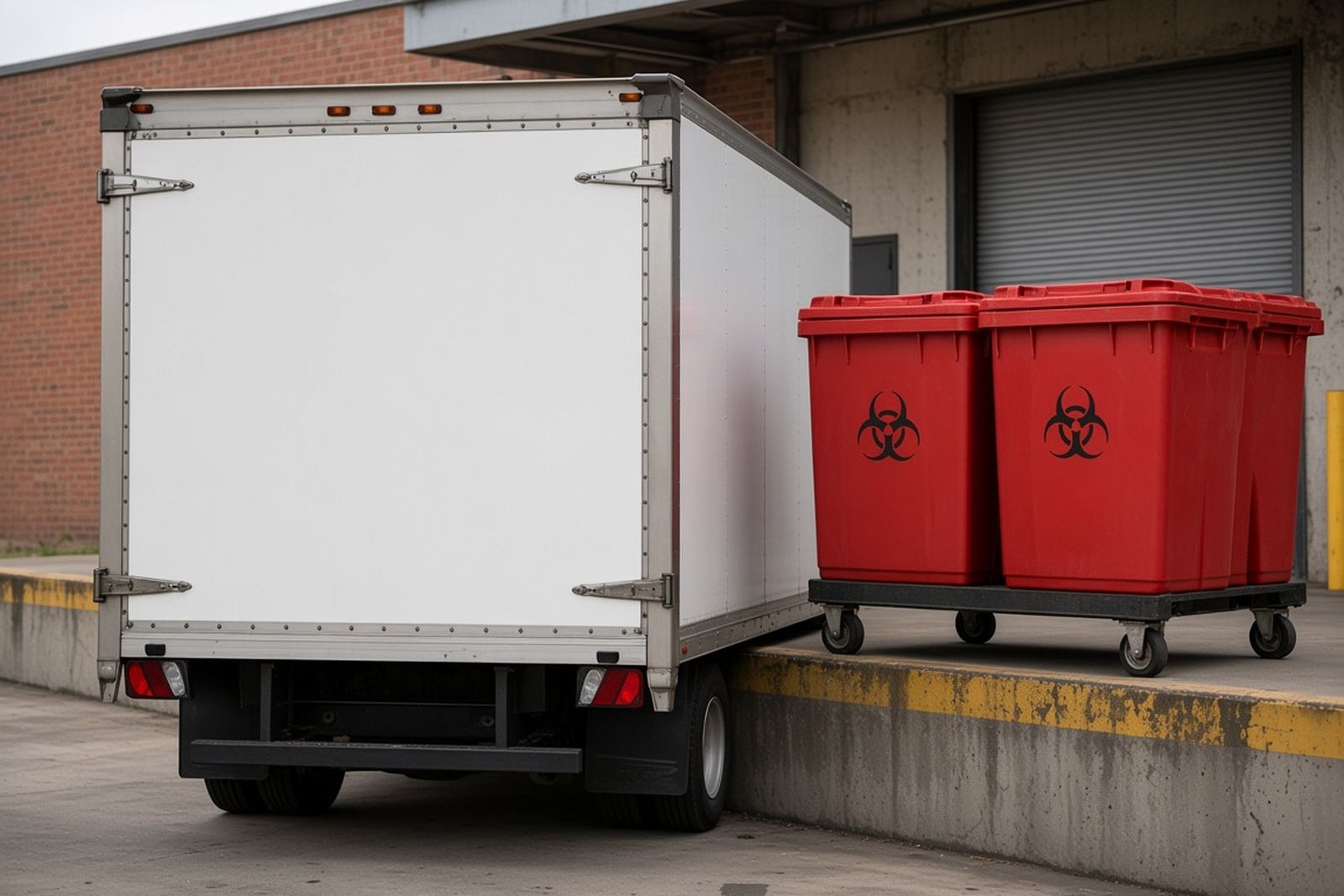
Knowledge quiz
Test what you know about who is responsible, container rules, shipping records, and proof of treatment. Then review the study guide for anything you missed.
Articles and resources
Read practical articles on storage limits, mail-back programs, rejected loads, and building a waste file that holds up to an inspection or insurer audit.