Free biohazard waste transport tool
Biohazard Waste Transport DIY or Call a Pro? Risk Check
Eight yes-or-no questions that produce a risk level and explain when professional help is the safer choice.
In a business, the question is not whether you personally should touch medical waste. The question is whether your staff can handle a certain task legally and safely with the training, containers, storage, and vehicles you have now. This risk check asks yes or no questions about that. Does your team have recorded blood safety training? Do you have approved containers and labels? Does the waste include sharps or body tissue? Is there more waste than your storage can hold within your state's time limit? Is anyone planning to haul it themselves? Is a chemical or unknown item present? The result is a risk level. It comes with an explanation of when a licensed hauler or a cleanup contractor is the safer choice.
Staff can properly do many things. They can sort waste where it is made, close and label containers, and set them in a secure room. They can also fill out the business's part of a waste shipping record. Staff should not haul medical waste on public roads without the required approval. They should not treat waste on site with makeshift methods. They should not clean up a leak from a tissue tub without proper safety gear and disinfectants. The risk check draws that line using your answers. A high result does not mean your team is careless. It means the task has gone beyond what a normal workplace is set up to do. Rules vary by state and county, so check any borderline call with your local authority.
How to use it
- 1Answer each yes or no question about your staff's training, equipment, storage space, and the waste involved.
- 2Pay attention to any question about hauling it yourself or treating it on site, since a yes there raises the risk level sharply.
- 3Read the risk level and the note on which tasks are still fine for staff.
- 4Use the note to decide whether to call your hauler for an extra pickup or a contractor for cleanup and disinfecting.
Prefer to ask a person?
Your request is sent to the follow-up inbox. A coordinator can reply by email. Not for emergencies; call 911 first if anyone is in danger.
Check whether DIY is safe
Biohazard Waste Transport: DIY or call a pro?
Eight yes-or-no questions. The result is an educational risk level, not a safety clearance.
1. Is there blood, body fluid, or anything that could carry a bloodborne pathogen?
2. Has the material soaked into carpet, padding, a mattress, drywall or a subfloor?
3. Is there a strong or lingering odor?
4. Could needles, broken glass, drug residue or unknown chemicals be present?
5. Does the affected area cover more than a small spot, or more than one room?
6. Will children, older adults, pregnant people or anyone immunocompromised use the space afterward?
7. Do you need documentation for insurance, a landlord, a sale, or an estate?
8. Would you be doing this while grieving, exhausted or under time pressure?
8 questions left to answer.
A worked example
Think about a made-up funeral home. Its regular hauler missed a scheduled stop. That left several sealed containers of medical waste in the prep room, including needles from embalming. The state's storage limit is getting close. The owner wonders if a worker could load the containers into the company van. The worker would drive them to the hauler's yard across town. He runs the risk check. His staff have recorded training, and the containers are approved and labeled correctly. Those answers lower the concern. But he answers yes to sharps and yes to the storage clock being near its limit. He also answers yes to staff hauling the waste on public roads. The tool returns a high risk level. It explains that hauling medical waste requires a hauler that follows DOT rules. In most states, it also needs a registration his business does not hold. That is true no matter how careful the driver would be. The tool says the safer path is to call the hauler and ask for an emergency pickup. He should record the missed stop in writing. If the limit will be passed, he should contact the state agency, explain what happened, and ask how to proceed. The owner follows that advice and keeps the containers secured. He also adds a clause about missed pickups to his next contract.
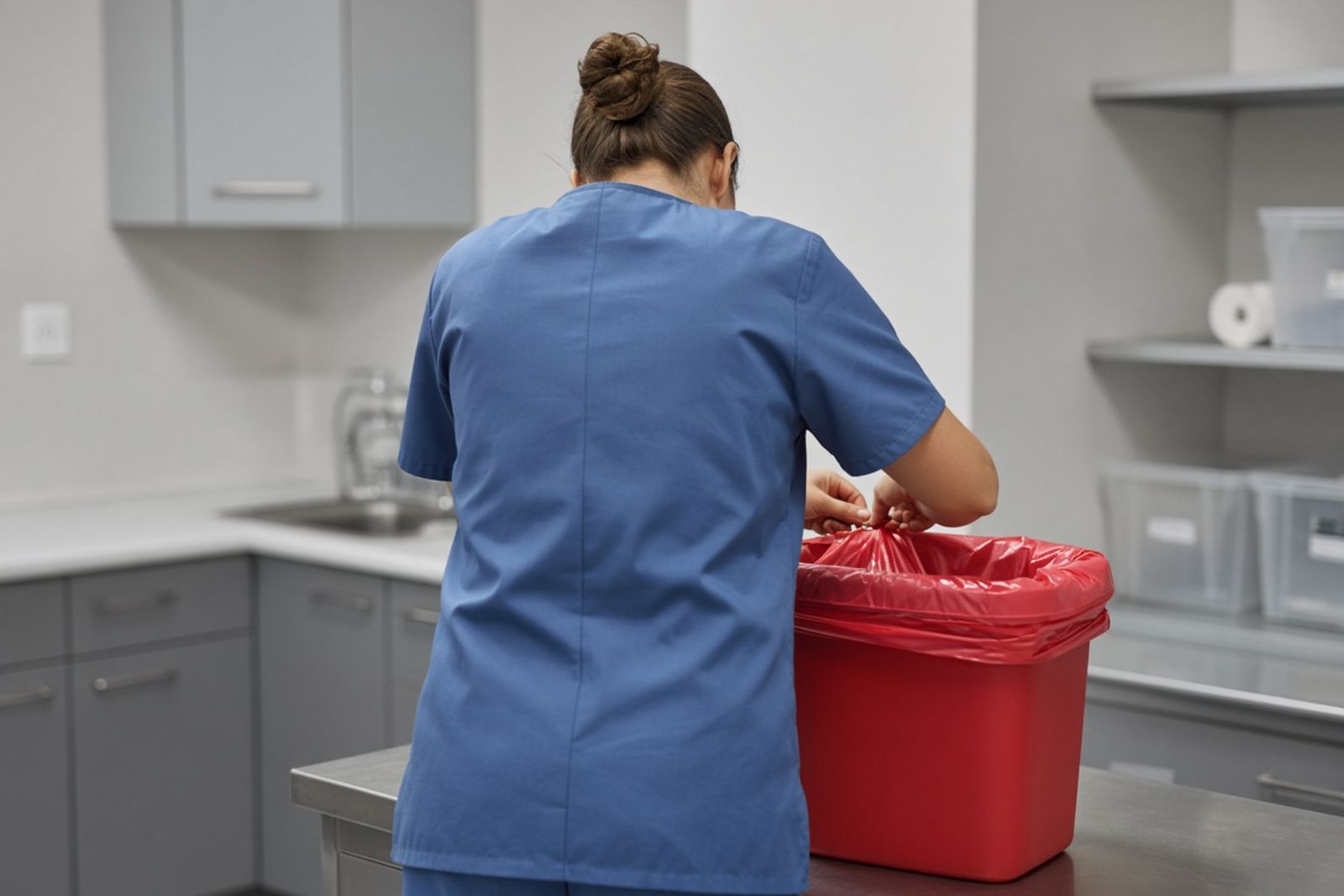
Numbers behind diy risk check decisions
- 67.8%
Among opioid-using respondents who saw boxes, 67.8% with unstable housing used them versus 45.3% with stable housing.
Read with care: Selected neighbourhood; disposal-box users are not necessarily people who inject drugs.
Source: Roth et al. (2021)358 residents and 78 business respondents in Kensington, Philadelphia.
- 49%
Discarded syringes found on walkthroughs declined 49% after programme implementation.
Read with care: Selected drug-affected areas; secular changes possible; baseline overlaps S063.
Source: Levine et al. (2019)Miami neighbourhood walkthroughs plus 448 pre-programme and 482 post-programme survey respondents.
- 44
San Francisco walkthroughs found 44 discarded syringes per 1,000 census blocks versus 371 in Miami.
Read with care: Cities differ in many ways; Miami baseline overlaps S062.
Source: Tookes et al. (2012)San Francisco and Miami selected-neighbourhood walkthroughs; 602 and 448 interviewees respectively.
- 15.3%
15.3% reported ever experiencing a work-related needlestick.
Read with care: Occupational/local sample; no infection transmission rates established.
Source: Mittal et al. (2016)503 Tijuana police officers in an anonymous 2014 occupational survey.
These figures are public research and agency data, not this network's own job records. Keep each number with its population, year and limits; none of them predicts cost, timing or outcome at a specific property.
DIY or Call a Pro? Risk Check questions for biohazard waste transport
Can staff move containers between rooms or buildings on our own property?
Moving closed, labeled containers within your own building is a normal staff task when done with the right safety gear. An example is moving them from a treatment room to a set storage area. Hauling them on public roads is different, even across the street to another building you own. That usually brings in the rules for hauling waste, so leave it to a licensed hauler.
What if a container leaks and staff want to clean it up?
Trained staff can deal with a small leak from a known biohazard container. They should wear gloves and eye protection, use a suitable disinfectant, and follow your written exposure plan. A cleanup contractor is the safer choice in some cases. Those include a leak of body tissue waste, a large amount, sharps, or an unknown material. The same goes if the affected area is large.
Does the check cover treating waste on site?
Yes. Some places think about on-site steam units or other treatment systems. Those need permits, testing, and record-keeping that vary by state and county. Makeshift methods, such as burning or soaking in chemicals, are not acceptable. A yes to on-site treatment raises the risk level unless a permitted system already exists. Permits must be checked before use.
How does volume affect the answer?
Staff can manage routine sorting and staging at normal volumes. Sometimes a surge makes more waste than your secure storage can hold within your state's time limit. The cause might be an outbreak, a busy procedure day, or a cleanup event. Then the right answer is an extra pickup or a bulk removal. Do not get creative and store waste in spaces that are not approved.
Does a low risk result mean we can skip the transporter?
No. A low result means the tasks right in front of you, like packing, labeling, and securing containers, are fine for trained staff. The waste still must leave your site through a licensed hauler or an approved mail-back program with proper tracking. The check covers handling. It does not remove the need for legal disposal.
Should we run the check again if conditions change?
Yes. The result depends on what you find, so new facts can change it. Answer the questions again if an odor starts, more sharps turn up, the affected area turns out to be larger, or someone vulnerable will use the space. Save each result with the date and a short note about what changed. Then you can show later why a task moved from staff to a licensed hauler or contractor.
Why does the check ask whether I am grieving or under time pressure?
Stress, fatigue, and grief make shortcuts and mistakes more likely. Those are the moments when exposures happen. Answering yes adds weight to the result because it is a real safety factor, not a judgment about you. If you are coping with a loss or a crisis, it is fine to hand the waste over to a pro. Then you can focus on yourself and the people around you.
Related community polls
Every count is a real visitor vote; nothing is seeded or padded. One vote per poll per device, and you can change your answer.
How does your business get medical waste off site now?
Which part of your waste program is most frustrating?
Other biohazard waste transport tools
Cost Range Estimator
Set the affected area, surface types, severity and extras to see an educational cost range and the factors that move it.
OpenProvider Vetting Checklist
Fifteen questions to ask any remediation provider, a readiness score, and a copyable list of what is still unanswered.
OpenInsurance Claim Organizer
A guided checklist from finding the policy to tracking the carrier decision, with a printable summary of where the claim stands.
OpenFirst 24 Hours Planner
Tell the planner a few facts about the situation and get an ordered list of who to call, what not to touch, and what to photograph.
OpenWaste & Disposal Classifier
Five questions about the material point to the likely waste category and which authority to confirm the rules with.
OpenMore on biohazard waste transport
Biohazard Waste Transport services
See how medical waste hauling works, from packing and shipping records to permitted treatment, before you sign with a hauler.
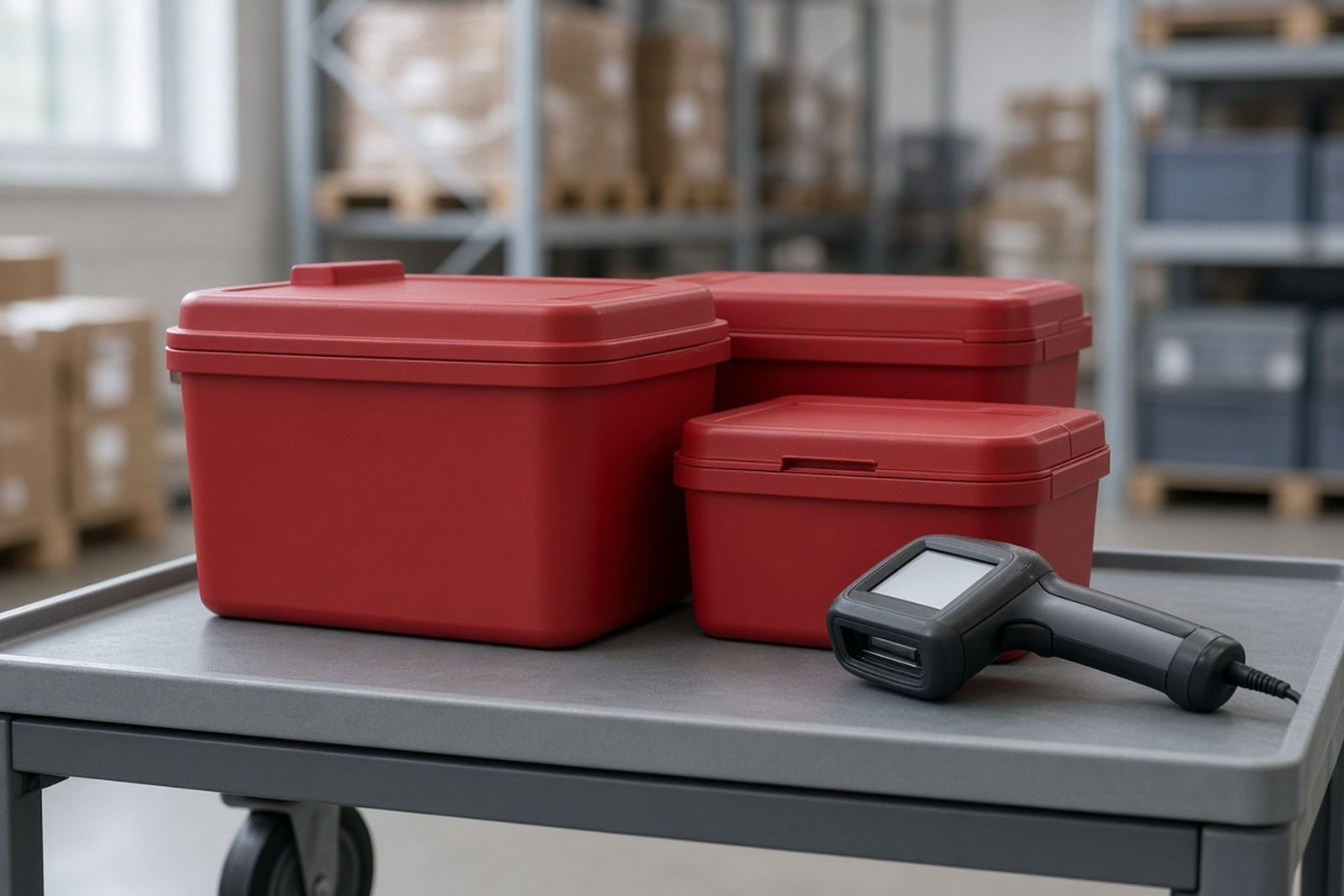
Costs explained
What drives the price, published cost ranges, and how to read a written quote line by line.
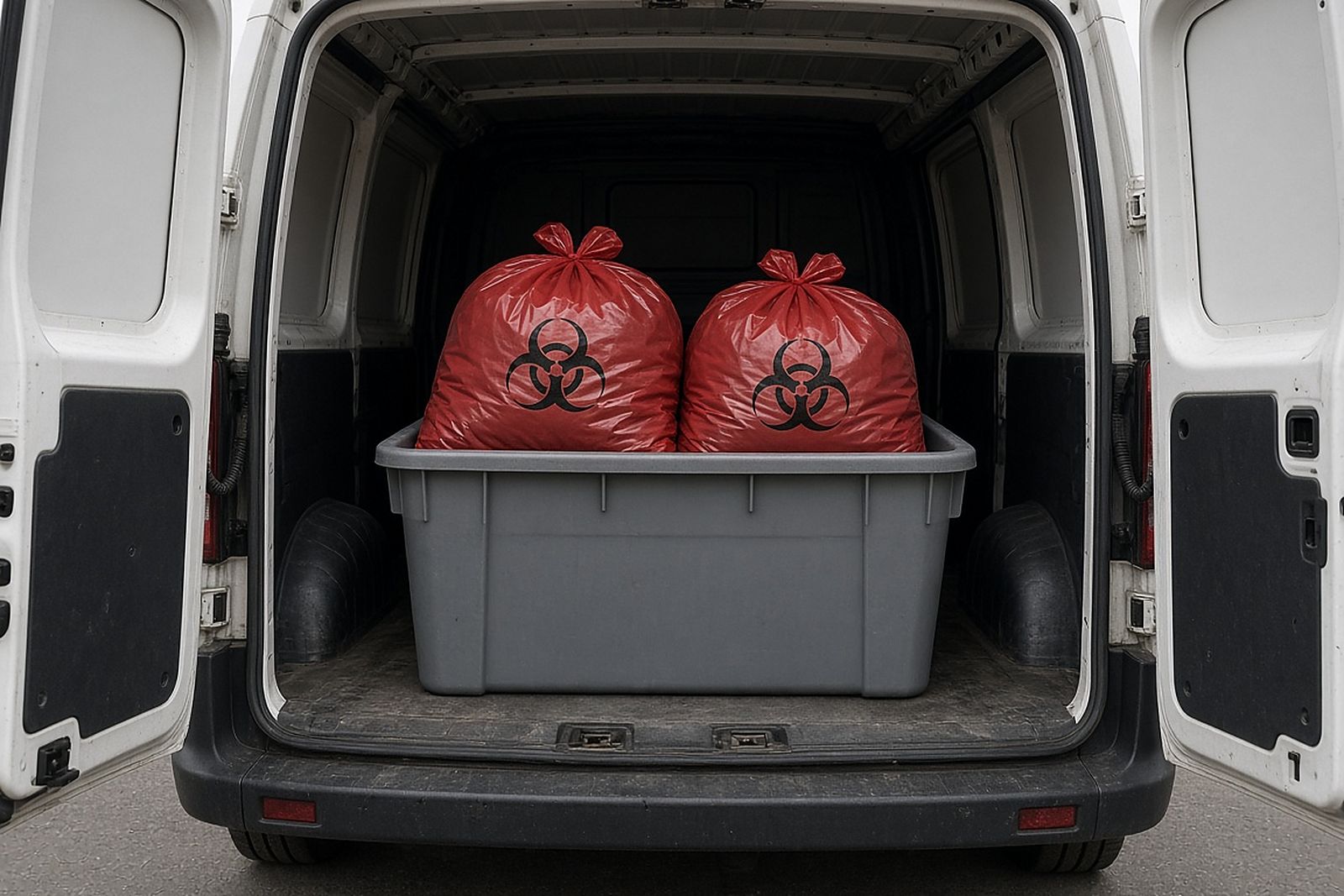
Insurance and payment
Which policies may respond, how to document a claim, and what to do if coverage is denied.
Community polls
See how other clinics, studios, labs, and property owners handle pickup schedules, paperwork, and hauler choices. See where opinions differ from the written rules.
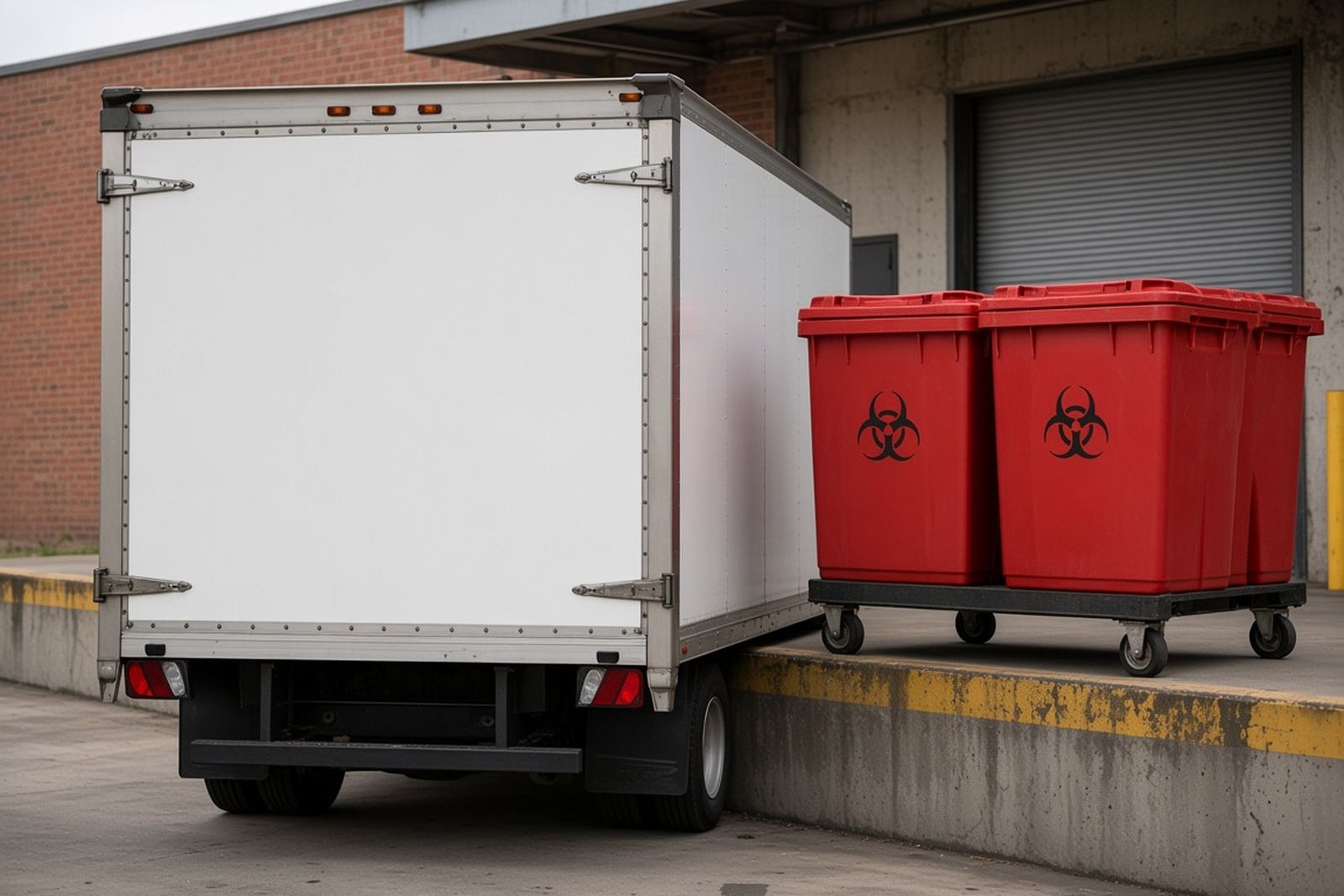
Knowledge quiz
Test what you know about who is responsible, container rules, shipping records, and proof of treatment. Then review the study guide for anything you missed.
Articles and resources
Read practical articles on storage limits, mail-back programs, rejected loads, and building a waste file that holds up to an inspection or insurer audit.