Free biohazard waste transport tool
Biohazard Waste Transport First 24 Hours Planner
Tell the planner a few facts about the situation and get an ordered list of who to call, what not to touch, and what to photograph.
The first day after you become responsible for biohazard waste is when most avoidable mistakes happen. Someone tosses a full red bag in the dumpster. A leaking tub is left in a hallway. A well-meaning worker drives containers to the landfill in a personal car. This planner asks about your situation. Has a cleanup crew already released the area? Are people or patients present? Is there an odor? Are sharps involved? Are animals on site? Do you rent the space? Then it gives you an ordered list of steps. It tells you who to call, what not to touch, and what to photograph. That way the waste is secured and recorded before anyone moves it.
The planner serves two groups. Businesses with ongoing waste use it when something goes wrong. A missed pickup might push containers toward a storage limit, or a container might be found damaged. Cleanup customers use it right after an event. The cleanup crew may have bagged the material, but the owner is unsure who arranges hauling and who signs the paperwork. In both cases the priorities are the same. Keep people away from the material. Keep it contained and labeled. Contact a licensed hauler or your current provider. Start the record that will become your shipping record file. Rules for storage and hauling vary by state and county. So the list also prompts you to confirm the rules with your local authority.
How to use it
- 1Answer each question honestly, including whether the area has been released, who is present, and whether sharps or animals are involved.
- 2Read the list from the top, and finish the keep-away and do-not-touch items before anything else.
- 3Take the photos the planner describes, focusing on container condition, labels, and where the waste is stored.
- 4Make the listed calls in order, starting with your hauler or a licensed provider, then your local authority if a question remains.
Prefer to ask a person?
Your request is sent to the follow-up inbox. A coordinator can reply by email. Not for emergencies; call 911 first if anyone is in danger.
Plan the first 24 hours
Biohazard Waste Transport: first 24 hours planner
Answer a few questions and the planner orders the next steps. It does not dispatch help and cannot replace emergency services.
Your ordered plan (6 steps)
- 1
Keep people and pets out of the affected area
Close the door and keep the area sealed until a qualified provider assesses it.
- 2
Photograph from the doorway before anything moves
Take wide shots first, then closer shots of stains, damage and belongings. Do not step into the area to do it. These photos support insurance and estate records.
- 3
Report the loss to your insurer and get a claim number
Ask the adjuster whether they need to inspect before materials are removed, and whether they have a list of approved remediation providers. Coverage depends on the policy and the cause of loss.
- 4
Call a qualified remediation provider for an assessment
Describe what happened, the rooms involved, and any odor, fluids or sharps. Ask which OSHA standards apply to biohazard waste transport and for proof of training and insurance before work starts.
- 5
Start a written log
Record who you spoke to, when, and what they said. Keep receipts for lodging, boarding, locks and any emergency purchases.
- 6
Look after the people involved
If a death or violent event is involved, victim assistance programs, hospice bereavement teams and the 988 Suicide & Crisis Lifeline can help. You do not need to manage this alone.
A worked example
Suppose a made-up property manager runs a small office building. A tenant's medical practice closed suddenly. It left several sealed medical waste boxes and a sharps container in a back room. No one can reach the tenant, and the manager is now responsible for the waste. He opens the planner. He notes that no cleanup crew is involved and that other tenants are in the building. He notes a faint odor near the room and that sharps are present. He notes that no animals are on site and that the space is leased. The planner starts with securing the room. Lock the door, post a notice, and keep cleaning staff out. It tells him not to open, combine, or move the boxes. It tells him not to put anything in the building dumpster. The photo step has him record each container's label, seal, and condition. He also photographs the room and the source of the odor if he can see it. The call list tells him to contact a licensed medical waste hauler to set up a pickup. It tells him to notify the building owner and its insurer. It also tells him to call the state agency that oversees medical waste. He should ask who is responsible when a tenant abandons waste. By the end of the day, the waste is untouched but secured, recorded, and scheduled for legal removal.
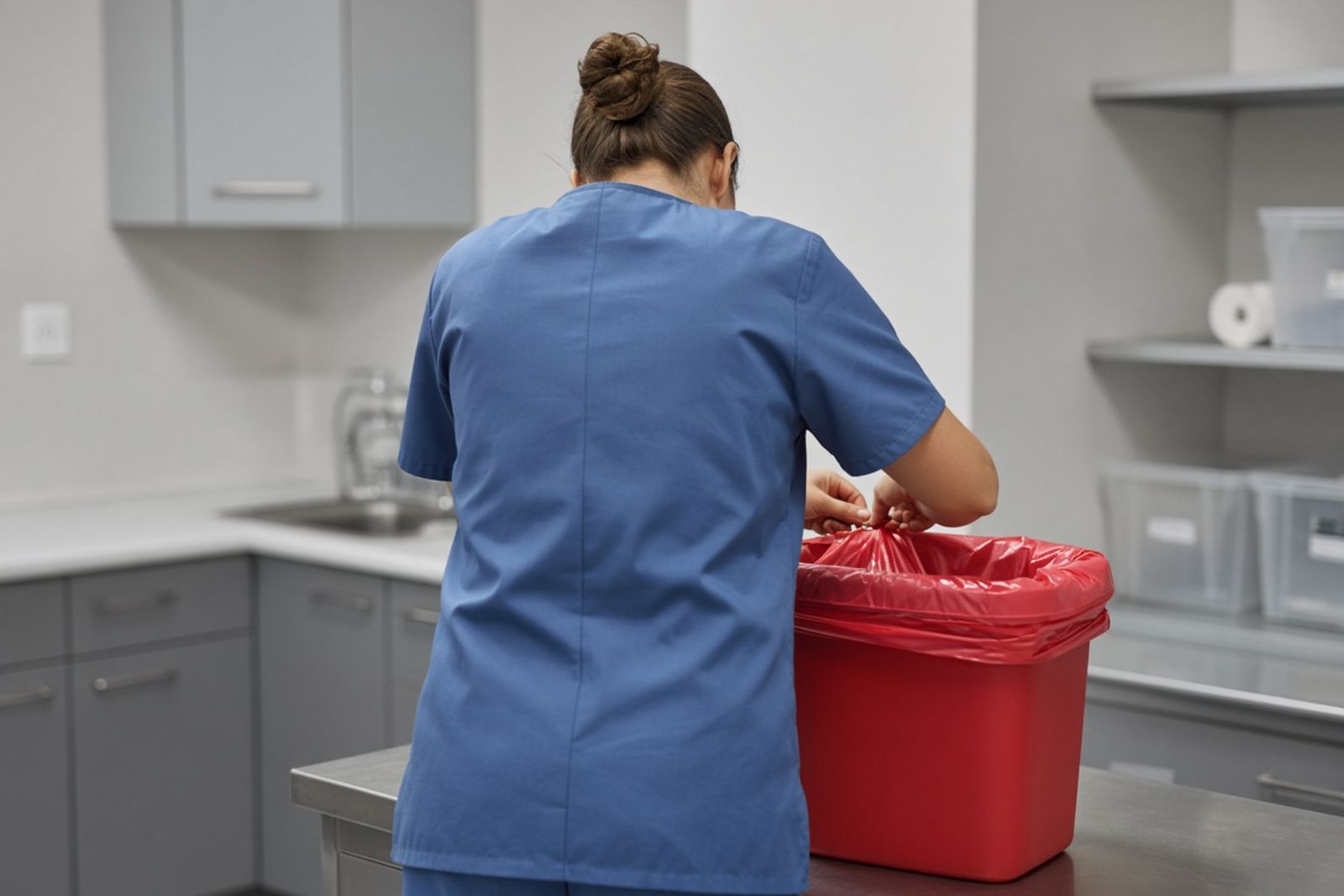
Numbers behind 24-hour planner decisions
- 385,000
CDC estimates 385,000 needlestick and other sharps injuries occur each year among hospital-based healthcare personnel, about 1,000 per day.
Read with care: Older estimate; excludes injuries in clinics, nursing homes and EMS.
Source: CDC (2008)United States hospital-based healthcare personnel
- 20.4%
US poison centers received 45,550 exposure calls related to cleaners and disinfectants in January-March 2020, a 20.4% increase over the same period in 2019.
Read with care: Reflects calls, not confirmed poisonings, and covers an unusual pandemic period with surging disinfectant use.
Source: CDC (2020)United States, National Poison Data System, January-March 2020 vs 2019
- 2–5x
EPA reports that concentrations of some indoor pollutants are often 2 to 5 times higher than typical outdoor concentrations.
Read with care: Refers to common pollutants such as VOCs, not specifically to drug or chemical residues.
Source: US EPA (2026)US indoor environments, general
- 16-21%
Handwashing reduces respiratory illnesses, like colds, in the general population by 16-21%, per the CDC.
Read with care: Effect sizes come from community studies and vary by setting; handwashing alone does not prevent all respiratory infections.
Source: CDC (2024)General population, CDC summary of published studies
These figures are public research and agency data, not this network's own job records. Keep each number with its population, year and limits; none of them predicts cost, timing or outcome at a specific property.
First 24 Hours Planner questions for biohazard waste transport
What should I never do in the first day?
Do not put regulated waste in normal trash or a dumpster. Do not carry it in a personal or company vehicle that is not approved to haul it. Do not open or repack containers to combine them. Do not pour fluids down a drain. Each of these creates a risk of exposure. Each can also shift legal blame onto you.
Who do I call if I do not have a transporter?
Contact a licensed medical waste hauler that serves your area. Explain what you have, including whether sharps or body tissue are involved. If you are unsure whether the waste is regulated, call the state or county agency that oversees medical waste first. Do this before you set up pickup, so you do not sort it wrong.
Why does the planner ask about odor?
A smell from stored biohazard waste can mean a container is damaged. It can mean body tissue that needs to be kept cold or picked up sooner. It can also mean the waste has started to rot after a long delay. A smell makes the job more urgent. It may also mean the room needs cleaning and disinfecting after removal. So the planner changes the step list and photo prompts when you report an odor.
Does renting the space change what I should do?
It changes who to notify, not the safety steps. A tenant should tell the landlord and check the lease for who is responsible. A landlord left with waste by a tenant should record the situation carefully before removal. Either way, a licensed hauler and your local authority are still the right calls to make.
What photographs matter most?
Photograph every container's label and biohazard mark. Show whether it is closed and whole. Capture any leaks or stains around it, the storage spot, and any lock or sign that controls access. Photos with time stamps taken before anything moves support your waste file. They also help with any insurance claim or dispute that follows. Take photos from outside the room when you can.
What if the waste is linked to a loved one who has died?
Take things one step at a time. The planner can still help you secure the area and list who to call. But you do not have to handle containers yourself. A cleanup company or licensed hauler can take over packing and removal. A trusted friend or relative can be the contact person. If grief feels like too much, reach out to someone you trust, or call or text 988 for support.
Can I use the planner for waste found at a vacant property?
Yes. Leave the question about people living or working in the building unchecked. Answer the odor, sharps, and rental questions honestly. Use the step list to record what you found before anything moves. At an empty property, securing doors and windows and keeping the area off limits matters even more, since no one is there to watch. Contact the local health or environmental agency if you cannot tell who made the waste.
Related community polls
Every count is a real visitor vote; nothing is seeded or padded. One vote per poll per device, and you can change your answer.
How does your business get medical waste off site now?
Which part of your waste program is most frustrating?
Other biohazard waste transport tools
Cost Range Estimator
Set the affected area, surface types, severity and extras to see an educational cost range and the factors that move it.
OpenProvider Vetting Checklist
Fifteen questions to ask any remediation provider, a readiness score, and a copyable list of what is still unanswered.
OpenInsurance Claim Organizer
A guided checklist from finding the policy to tracking the carrier decision, with a printable summary of where the claim stands.
OpenWaste & Disposal Classifier
Five questions about the material point to the likely waste category and which authority to confirm the rules with.
OpenDIY or Call a Pro? Risk Check
Eight yes-or-no questions that produce a risk level and explain when professional help is the safer choice.
OpenMore on biohazard waste transport
Biohazard Waste Transport services
See how medical waste hauling works, from packing and shipping records to permitted treatment, before you sign with a hauler.
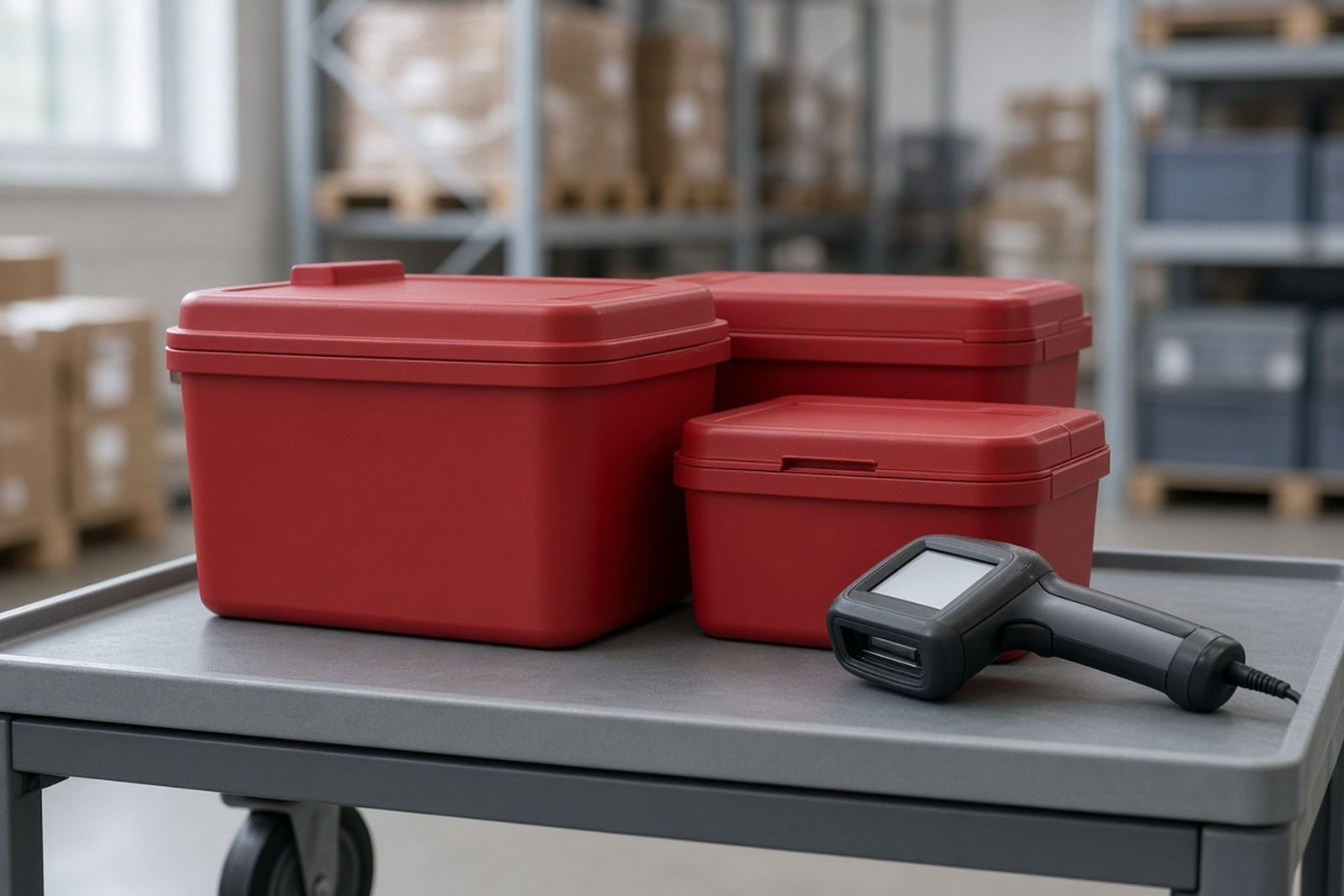
Costs explained
What drives the price, published cost ranges, and how to read a written quote line by line.
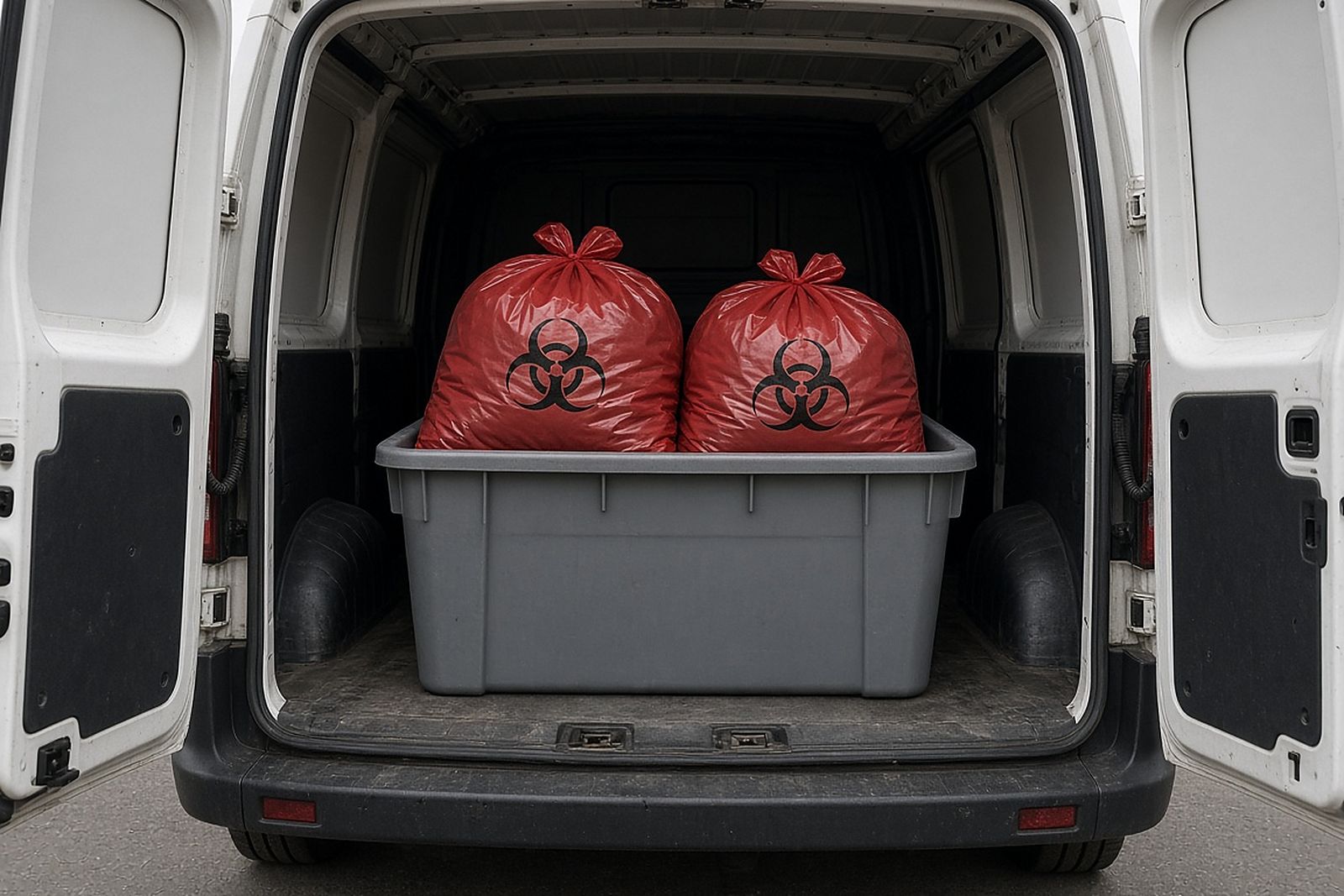
Insurance and payment
Which policies may respond, how to document a claim, and what to do if coverage is denied.
Community polls
See how other clinics, studios, labs, and property owners handle pickup schedules, paperwork, and hauler choices. See where opinions differ from the written rules.
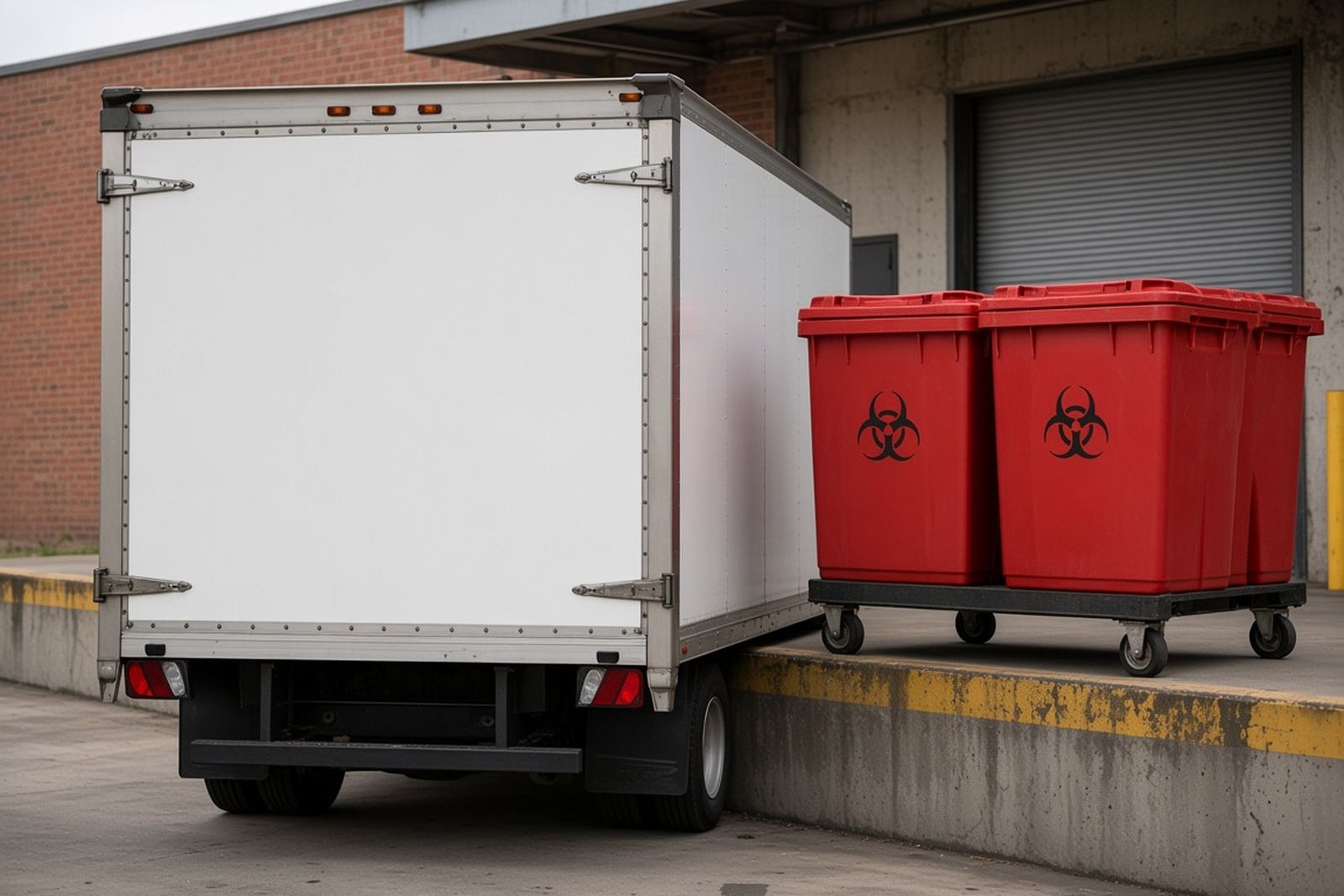
Knowledge quiz
Test what you know about who is responsible, container rules, shipping records, and proof of treatment. Then review the study guide for anything you missed.
Articles and resources
Read practical articles on storage limits, mail-back programs, rejected loads, and building a waste file that holds up to an inspection or insurer audit.