Free biohazard waste transport tool
Biohazard Waste Transport Insurance Claim Organizer
A guided checklist from finding the policy to tracking the carrier decision, with a printable summary of where the claim stands.
Insurance rarely comes up with routine waste pickup. But it matters a lot after something goes wrong. A container might leak and soil a storage room. A hauler's truck carrying your waste might crash. You might hope to get back the hauling costs from a cleanup job. Or someone might file a claim after sharps are found that were thrown out wrongly. This organizer walks you through the steps. You find the policies that might apply and describe the cause of loss in plain words. You give notice on time and record the event and the waste involved. You get a written work plan from the cleanup crew or hauler, and you track the insurer's choices. Each step has a checklist, so nothing is missed while you also handle the daily work.
Coverage in this field can come from several places. Your commercial property policy may pay for damage from a leak or spill inside your building. A pollution policy, if you have one, may cover contamination and cleanup. The hauler's own vehicle and pollution coverage may be the main source for accidents on the road. That is why insurance certificates matter. Nothing in this tool predicts what an insurer will pay, and no provider can promise approval. The organizer helps you present a complete, orderly file with shipping records, photos, and work plans attached. That is the best position for your talk with your adjuster and broker. An organized file also cuts the time an adjuster needs to respond.
How to use it
- 1Gather your commercial property, general liability, and any pollution policies, plus the hauler's insurance certificate, and note the policy numbers.
- 2Describe the cause of loss in plain words, such as a container leak during storage or an accident on the road.
- 3Work through the notice, records, and written work plan steps, and check off each item as you finish it.
- 4Print the summary and keep it with the shipping records and photos, so your broker and adjuster see one organized file.
Prefer to ask a person?
Your request is sent to the follow-up inbox. A coordinator can reply by email. Not for emergencies; call 911 first if anyone is in danger.
Organize an insurance claim
Biohazard Waste Transport insurance claim organizer
A checklist to keep the claim orderly. It stores nothing on our servers; copy the summary to your own notes.
0 of 18 steps recorded (0%)
Print or paste the summary into your own records. Coverage is the carrier's decision under the policy; keep every answer in writing.
A worked example
Picture a made-up nursing home. After a weekend, staff find a medical waste tub leaking in a utility room. It has soaked the floor and part of a wall. The administrator opens the organizer. She starts by finding the home's commercial property policy and its general liability policy. The hauler supplied the tub, so she also pulls the hauler's insurance certificate from the contract file. She wants to see whether the hauler's coverage might apply. She records the cause of loss as a container failure during storage on site. At the notice step, she calls her broker the same day. She asks which policy to notify first and writes down the call. At the records step, she photographs the tub, the label, the floor, and the wall before anything is cleaned. She saves the waste shipping record from the last pickup. It shows the tub was accepted in good condition. The home's cleanup contractor then gives a written work plan. It lists cleanup, drywall removal, and hauling the removed material as regulated waste as separate items. The administrator attaches that plan and the new shipping record for the removed debris to the summary. Later the adjuster asks how the waste was handled. The printed summary and its attachments answer the question without a hunt through email.

Numbers behind claim organizer decisions
- 90 days
New hazmat employees must complete required DOT training within 90 days of employment and may work only under direct supervision until then.
Read with care: Training covers general awareness, function-specific, safety and security awareness.
Source: DOT PHMSA (49 CFR via Cornell LII) (2024)United States, hazmat employees including medical waste transporters
- 50 pounds
In Texas, generators of more than 50 pounds of untreated medical waste who self-transport must register, with annual fees from $100 to $500 based on volume.
Read with care: Texas-specific thresholds; other states differ.
Source: Texas Commission on Environmental Quality (2025)Texas, medical waste transporters and self-transporting generators
- UN2814/UN2900/UN3549
Regulated medical waste containing a Category A infectious substance must be classed as an infectious substance and assigned UN2814, UN2900 or UN3549 rather than UN3291.
Read with care: Industry association compilation; consult the CFR text for authoritative wording.
Source: American Bio Recovery Association (citing 49 CFR 173.134) (2023)United States, 49 CFR 173.134(a)(5)
- 30 years
OSHA requires employee medical records related to bloodborne pathogen exposure to be kept for the duration of employment plus 30 years.
Read with care: Applies to exposure records, not waste manifests.
Source: OSHA (2024)United States employers covered by the standard
These figures are public research and agency data, not this network's own job records. Keep each number with its population, year and limits; none of them predicts cost, timing or outcome at a specific property.
Insurance Claim Organizer questions for biohazard waste transport
Which policy usually responds to a leak inside my building?
A commercial property policy is the most common place to start for damage to your own floors, walls, and contents. But pollution exclusions can make things harder. Ask your broker whether your policy has a pollution or contamination exclusion. Ask whether any add-on brings back coverage for this type of event. Having your broker review it ahead of time avoids surprises later.
Does the transporter's insurance cover my loss?
Possibly, if the hauler's equipment or actions caused the damage. That is why you should keep their insurance certificate on file. Their insurer will look into the cause and may dispute who is at fault. Notify your own insurer as well, so you are not stuck waiting on another company's choice. Keep copies of all letters and emails between the insurers in your file.
Why does the organizer ask for waste shipping records?
Waste shipping records show what waste existed, when it was picked up, and what shape it was in. That helps prove the cause and timing. For cleanup claims, the records for removed debris show that the hauling cost on the bill matches real, recorded waste. Adjusters often ask for them. Without them, cause and timing depend on memory, not records.
How quickly should I give notice?
Policies usually require prompt notice, and delays can put coverage at risk. Contact your broker or insurer as soon as you know a loss happened, even before you know how big it is. That is why the organizer puts notice early in the steps. It lets you record the date and the name of the person you spoke with.
Can I claim ongoing pickup fees?
Routine service is a normal business cost. It is not usually a covered loss. Hauling costs that come straight from a covered event are different. One example is removing soiled building materials after a leak or a trauma event. Those costs should be listed separately in the contractor's work plan, so the adjuster can review them.
Can the organizer help after a transport vehicle accident involving my waste?
Yes. Work through its steps in order. Find which of your policies might apply. Write one sentence on what happened and when you learned of it. Record when you gave notice, and log every call. Add the shipping papers for that pickup to your file. Ask the hauler for its accident report and insurance details. Tell your broker, so you understand whether any of the risk reaches your business.
What should I do with the organizer output after a claim closes?
The organizer stores nothing on the site's servers. So copy or print the summary before you leave the page. Keep it with the claim file and your waste records for that location. It shows the timeline, claim number, adjuster, and finished steps in one place. That helps if a question comes back during an audit, a property sale, or a later dispute. Review it before renewal to talk about coverage gaps with your broker.
Related community polls
Every count is a real visitor vote; nothing is seeded or padded. One vote per poll per device, and you can change your answer.
How does your business get medical waste off site now?
Which part of your waste program is most frustrating?
Other biohazard waste transport tools
Cost Range Estimator
Set the affected area, surface types, severity and extras to see an educational cost range and the factors that move it.
OpenProvider Vetting Checklist
Fifteen questions to ask any remediation provider, a readiness score, and a copyable list of what is still unanswered.
OpenFirst 24 Hours Planner
Tell the planner a few facts about the situation and get an ordered list of who to call, what not to touch, and what to photograph.
OpenWaste & Disposal Classifier
Five questions about the material point to the likely waste category and which authority to confirm the rules with.
OpenDIY or Call a Pro? Risk Check
Eight yes-or-no questions that produce a risk level and explain when professional help is the safer choice.
OpenMore on biohazard waste transport
Biohazard Waste Transport services
See how medical waste hauling works, from packing and shipping records to permitted treatment, before you sign with a hauler.
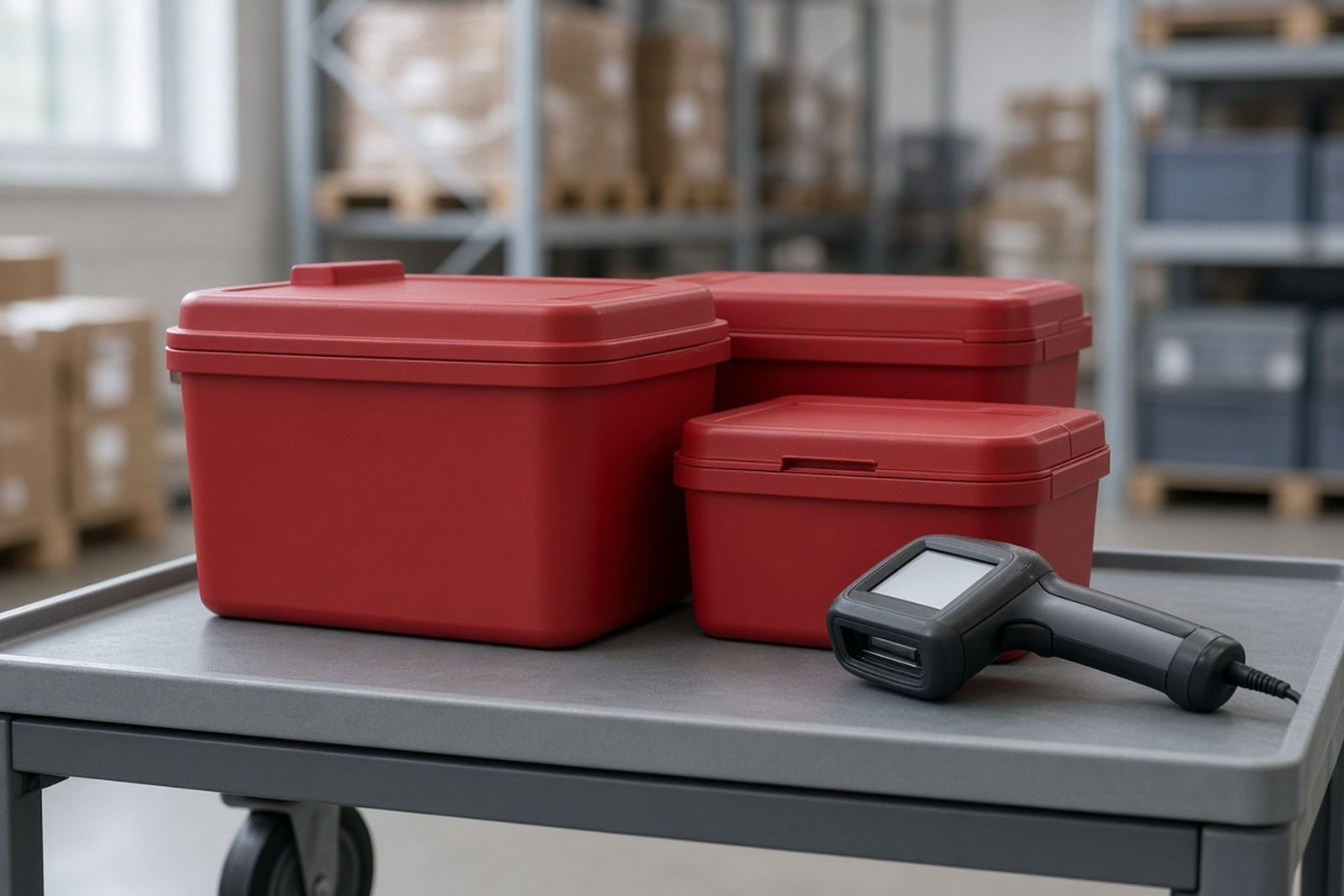
Costs explained
What drives the price, published cost ranges, and how to read a written quote line by line.
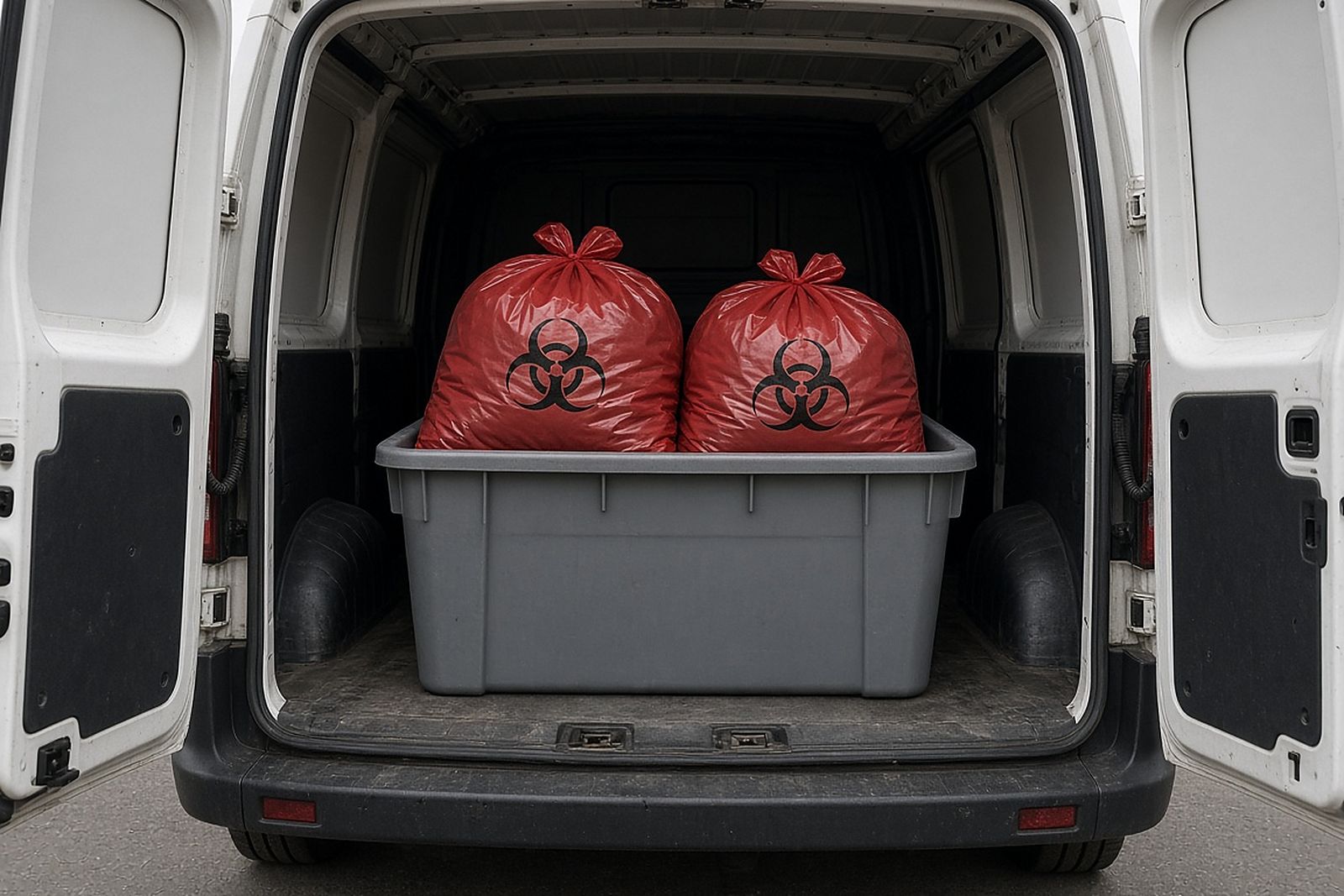
Insurance and payment
Which policies may respond, how to document a claim, and what to do if coverage is denied.
Community polls
See how other clinics, studios, labs, and property owners handle pickup schedules, paperwork, and hauler choices. See where opinions differ from the written rules.
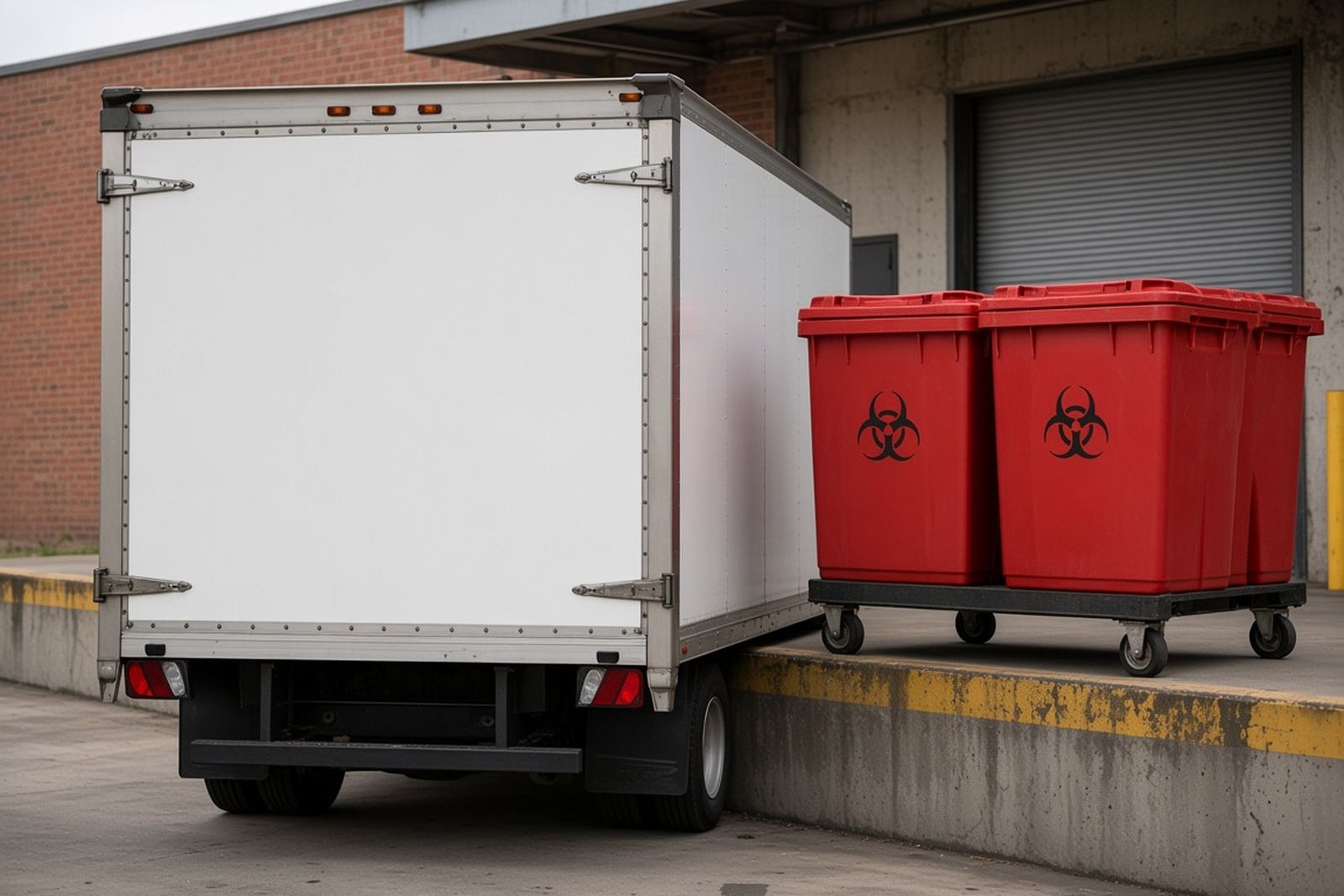
Knowledge quiz
Test what you know about who is responsible, container rules, shipping records, and proof of treatment. Then review the study guide for anything you missed.
Articles and resources
Read practical articles on storage limits, mail-back programs, rejected loads, and building a waste file that holds up to an inspection or insurer audit.