Free biohazard waste transport tool
Biohazard Waste Transport Provider Vetting Checklist
Fifteen questions to ask any remediation provider, a readiness score, and a copyable list of what is still unanswered.
Choosing a medical waste hauler is a legal choice as much as a buying one. Your name stays on the paperwork no matter who drives the truck. This checklist gives you questions to ask a hauler you are considering. They cover registration with your state and the permits held by the treatment sites they use. They cover how waste shipping records are handled and returned, and what training their drivers get. They also cover how they handle rejected loads and what happens to your records if they go out of business. As you confirm each answer with documents, not spoken promises, the tool adds up a readiness score. It also builds a list of open questions, so you know just what to ask for before signing.
The score measures how much you have checked. It does not rate the company. A provider with a low score may simply not have been asked yet. Use the open-questions list as the agenda for a follow-up call or email. Treat any reluctance to give a registration number, an insurance certificate, or the name of a treatment site as a real warning sign. Rules for licensing haulers vary by state and county. So pair this checklist with a call to the agency that registers haulers in your area. That agency can confirm whether a company is allowed to haul right now, which no checklist can do. Checking facts, not reputation, is what protects your file.
How to use it
- 1Read each question and ask the provider for the document or written answer that backs it up.
- 2Tick a question only after you have seen proof, such as a registration, an insurance certificate, or a sample shipping record.
- 3Review the readiness score to see how much of the picture you have checked so far.
- 4Copy the open-questions list into an email to the provider and to your state authority to confirm.
Prefer to ask a person?
Your request is sent to the follow-up inbox. A coordinator can reply by email. Not for emergencies; call 911 first if anyone is in danger.
Vet a provider before you sign
Biohazard Waste Transport provider vetting checklist
Start with the questions specific to this kind of job. Tick each one once the provider has answered it in writing or shown you the document. Your progress stays on this device only.
Readiness: 0 of 21 confirmed (0%)
21 questions still need a written answer. Copy the list and send it to the provider before you sign anything.
A worked example
Think about a made-up dental group with several offices. It wants to move all its medical waste service to one hauler. The operations director interviews three companies and works through the checklist with each. The first company quickly sends its state hauler registration and an insurance certificate that shows pollution coverage. It also sends sample shipping records and the names and permit numbers of the steam treatment sites it uses. Most items are ticked after one call. The second company answers every question with confidence but sends no documents. The director leaves most items unticked. That gives a low score and a long open-questions list, which she sends to their sales contact. The third company offers a very low rate. But it cannot name the treatment site for sharps and says the waste goes to a partner. That answer fails the treatment-site question outright. The director uses the open-questions lists to write follow-up emails. Then she calls her state's environmental agency. She confirms that the first company's registration is active and that the named sites hold current permits. Only after that does she ask for final written proposals and compare price. The checklist did not pick the winner. It made sure she compared providers on checked facts, not sales pitches.

Numbers behind vetting checklist decisions
- 3.95
Nurse-led training was associated with higher adjusted odds of correct disposal (OR 3.95; 95% CI 1.37–11.34).
Read with care: Self-report; clinic sample; study definition of correct disposal is not a universal legal standard.
Source: Huang et al. (2018)151 patients at one US tertiary endocrinology clinic.
- 37.1%
37.1% reported taking sharps containers to disposal facilities.
Read with care: Self-report and single clinic; distinguish container use from final drop-off.
Source: Charbonneau et al. (2022)89 respondents at a US community care clinic.
- 52%
52% were classified as having poor disposal knowledge.
Read with care: Sample-specific knowledge classifications; cannot generalise to all China.
Source: Zan et al. (2024)334 people with diabetes in China.
- 32.5%
32.5% reported reusing needles.
Read with care: Single hospital; self-report; adjusted associations, not intervention effects.
Source: Wu et al. (2025)1,810 insulin-treated outpatients in Enshi, China; 2023–2024; 30-day recall.
These figures are public research and agency data, not this network's own job records. Keep each number with its population, year and limits; none of them predicts cost, timing or outcome at a specific property.
Provider Vetting Checklist questions for biohazard waste transport
What document proves a transporter is licensed?
Most states give a registration or permit number to companies allowed to haul medical waste. Some also require decals on each vehicle. Ask for the current certificate, then confirm it with the agency that issued it. A federal DOT number alone does not show the state has approved the company for this type of waste. Check the expiration date on any certificate as well.
Why does the checklist ask about the treatment facility?
Your duty ends only when a permitted site records that the waste was treated. So you need to know where the waste goes. A provider who cannot name the site, or describes it vaguely, leaves you unable to check the end of the chain. Ask for site names and permit details for each type of waste you make.
Should I ask about driver training?
Yes. Drivers who handle medical waste fall under DOT hazardous materials training rules in 49 CFR. They are also covered by the blood safety protections in 29 CFR 1910.1030. Ask how training is recorded and how often it is renewed. A provider that finds this an odd question may not be running a program that meets the rules.
What insurance should a transporter carry?
Look for general liability and vehicle liability coverage. Also look for pollution coverage that pays for spills and accidents while the waste is on the road. Ask for an insurance certificate that lists your business as a certificate holder. Then you will be told if the coverage lapses. Check the policy limits with your own broker. Do not just take the provider's word for them. Ask for new certificates each time the policy renews.
How do I handle a provider that scores well but costs more?
Checked compliance has value, because your business carries the legal risk if the chain of custody breaks. Compare the price gap with the cost of a rejected load, a missing waste shipping record during an inspection, or an exposure event. If the cheaper provider can close its open questions with documents, the gap between them may shrink.
Can I use the checklist to review my current transporter?
Yes, and it works well before a renewal date. Answer each item based on what your current hauler has really shown you, not what you assume. Gaps often show up around treatment site names, returned records, or insurance certificates that were never updated. Send the open items to your account contact in writing. Give them a chance to close each one before you decide whether to stay.
What if a provider will not answer some checklist items in writing?
Note which items were answered only by phone. Ask again by email, and explain that you keep written answers in your compliance file. Many providers will agree once they understand why. The checklist is meant to be ticked only when you have a written answer or a document. So leave the others unticked, and use the copy button to resend the open list. A pattern of reluctance tells you something in itself.
Related community polls
Every count is a real visitor vote; nothing is seeded or padded. One vote per poll per device, and you can change your answer.
How does your business get medical waste off site now?
Which part of your waste program is most frustrating?
Other biohazard waste transport tools
Cost Range Estimator
Set the affected area, surface types, severity and extras to see an educational cost range and the factors that move it.
OpenInsurance Claim Organizer
A guided checklist from finding the policy to tracking the carrier decision, with a printable summary of where the claim stands.
OpenFirst 24 Hours Planner
Tell the planner a few facts about the situation and get an ordered list of who to call, what not to touch, and what to photograph.
OpenWaste & Disposal Classifier
Five questions about the material point to the likely waste category and which authority to confirm the rules with.
OpenDIY or Call a Pro? Risk Check
Eight yes-or-no questions that produce a risk level and explain when professional help is the safer choice.
OpenMore on biohazard waste transport
Biohazard Waste Transport services
See how medical waste hauling works, from packing and shipping records to permitted treatment, before you sign with a hauler.
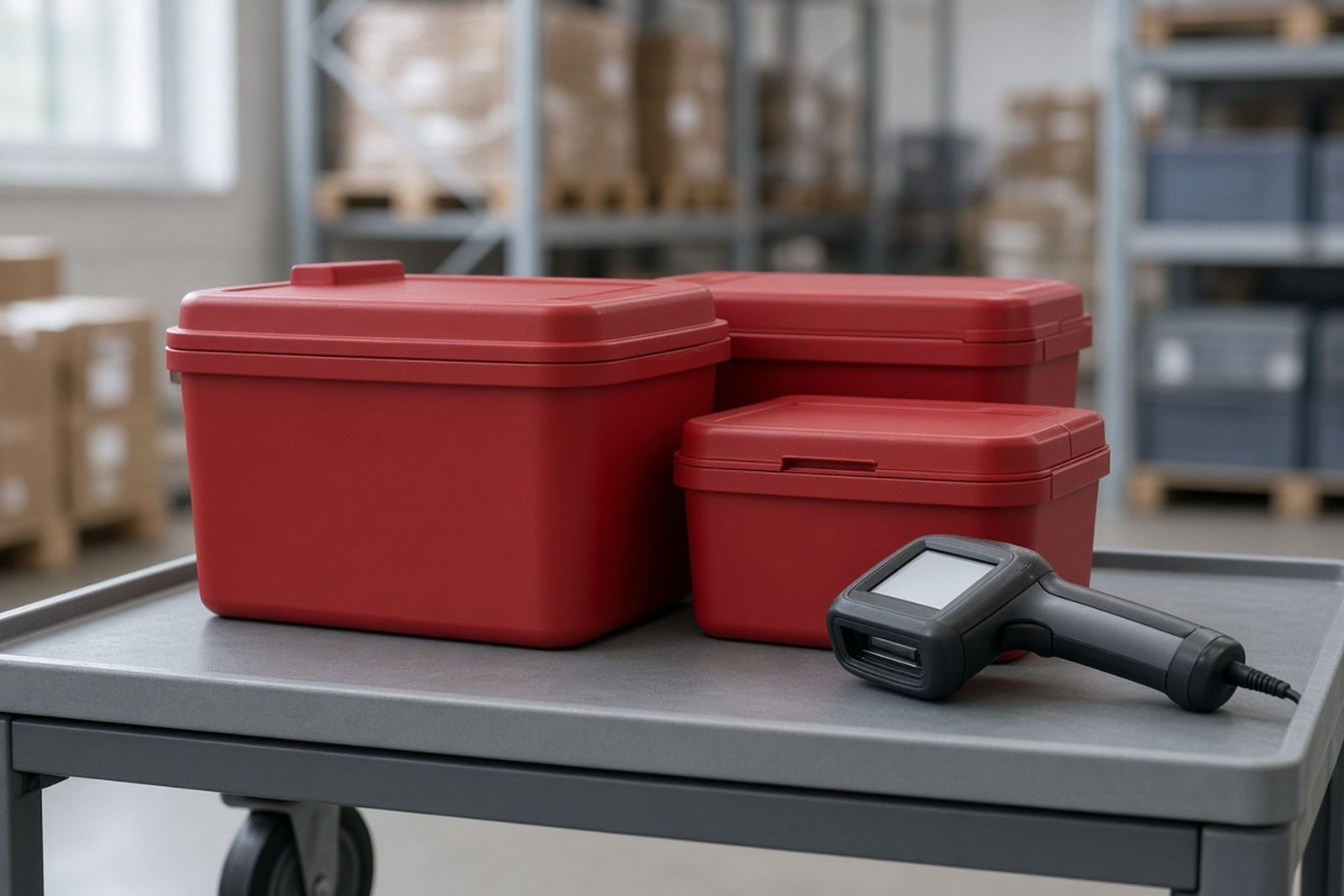
Costs explained
What drives the price, published cost ranges, and how to read a written quote line by line.
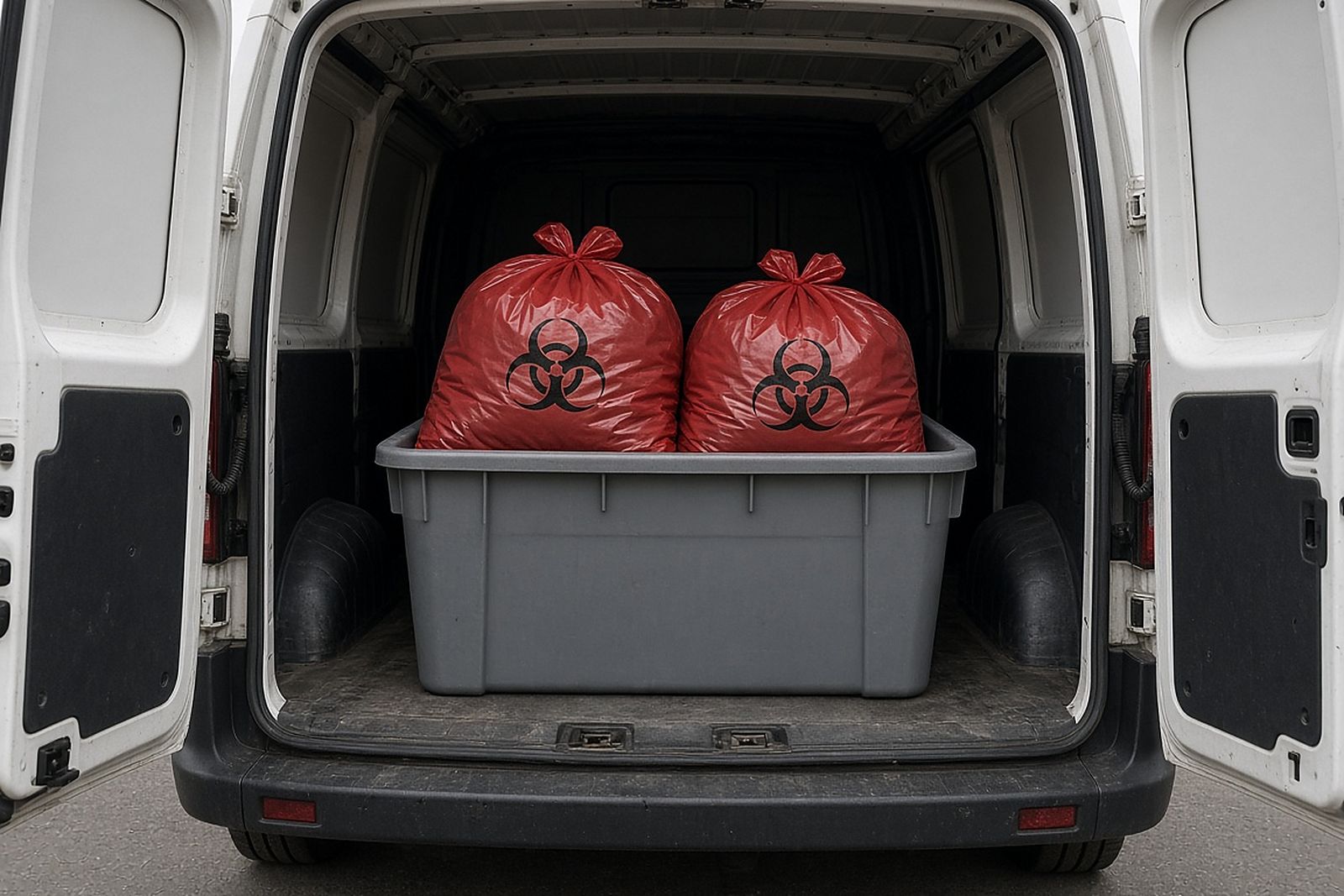
Insurance and payment
Which policies may respond, how to document a claim, and what to do if coverage is denied.
Community polls
See how other clinics, studios, labs, and property owners handle pickup schedules, paperwork, and hauler choices. See where opinions differ from the written rules.
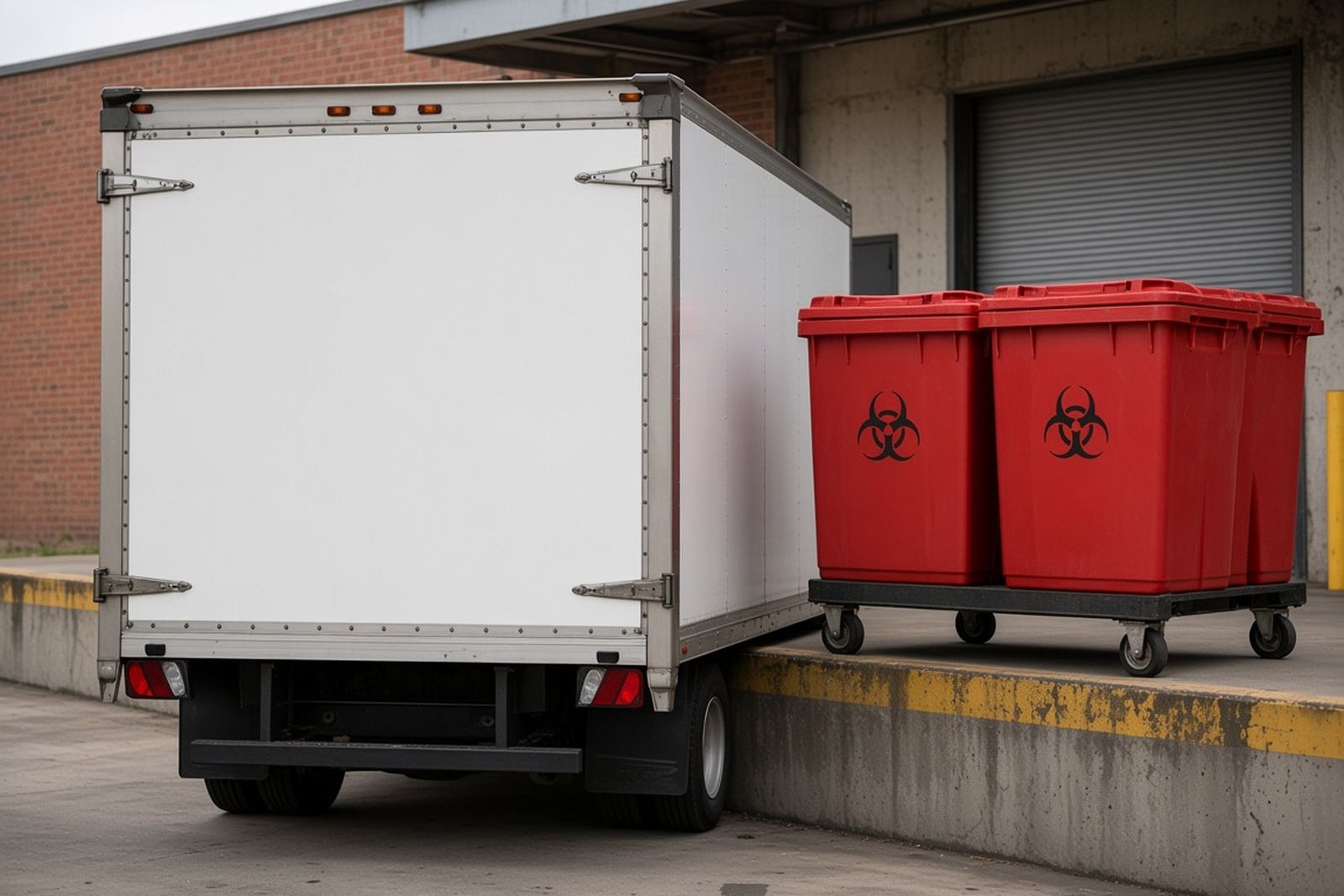
Knowledge quiz
Test what you know about who is responsible, container rules, shipping records, and proof of treatment. Then review the study guide for anything you missed.
Articles and resources
Read practical articles on storage limits, mail-back programs, rejected loads, and building a waste file that holds up to an inspection or insurer audit.