Biohazard Waste Transport: Regulations
How to identify the worker-safety, waste, transport, environmental, and local rules that may apply to biohazard waste transport. Confirm jurisdiction-specific requirements with the issuing authority.
Posts on rules explain how the rules for biohazard waste hauling fit together. They describe the role of federal DOT hazardous materials rules for packing and shipping papers. They cover how OSHA's blood safety rule protects workers who handle containers. They explain why state medical waste programs define what counts as regulated waste, and how local health codes can add storage rules. Other posts show you how to look up waste rules for your own address and type of business without relying on a vendor's summary. Several posts also explain why a hauler's permit in one state does not automatically cover work in the state next door.
Get an email reply about biohazard waste transport
Send a short message to the follow-up inbox. A coordinator can reply by email. This form does not send emergency help; call 911 first if anyone is in danger.
Getting the rules right matters because the business that made the waste usually stays responsible for it, even after it leaves. If a hauler mishandles a load, inspectors may still ask to see your shipping records, storage logs, and training records. These posts help you understand which rules touch each step of your waste program. Then you can notice when a practice needs a second look. You will know which agency to call before an inspector arrives. The posts also explain why training records, storage logs, and written waste plans deserve the same care as shipping records, since an inspector may ask for any of them. Keeping these papers together in one place turns a stressful records request into a routine task you can handle calmly.
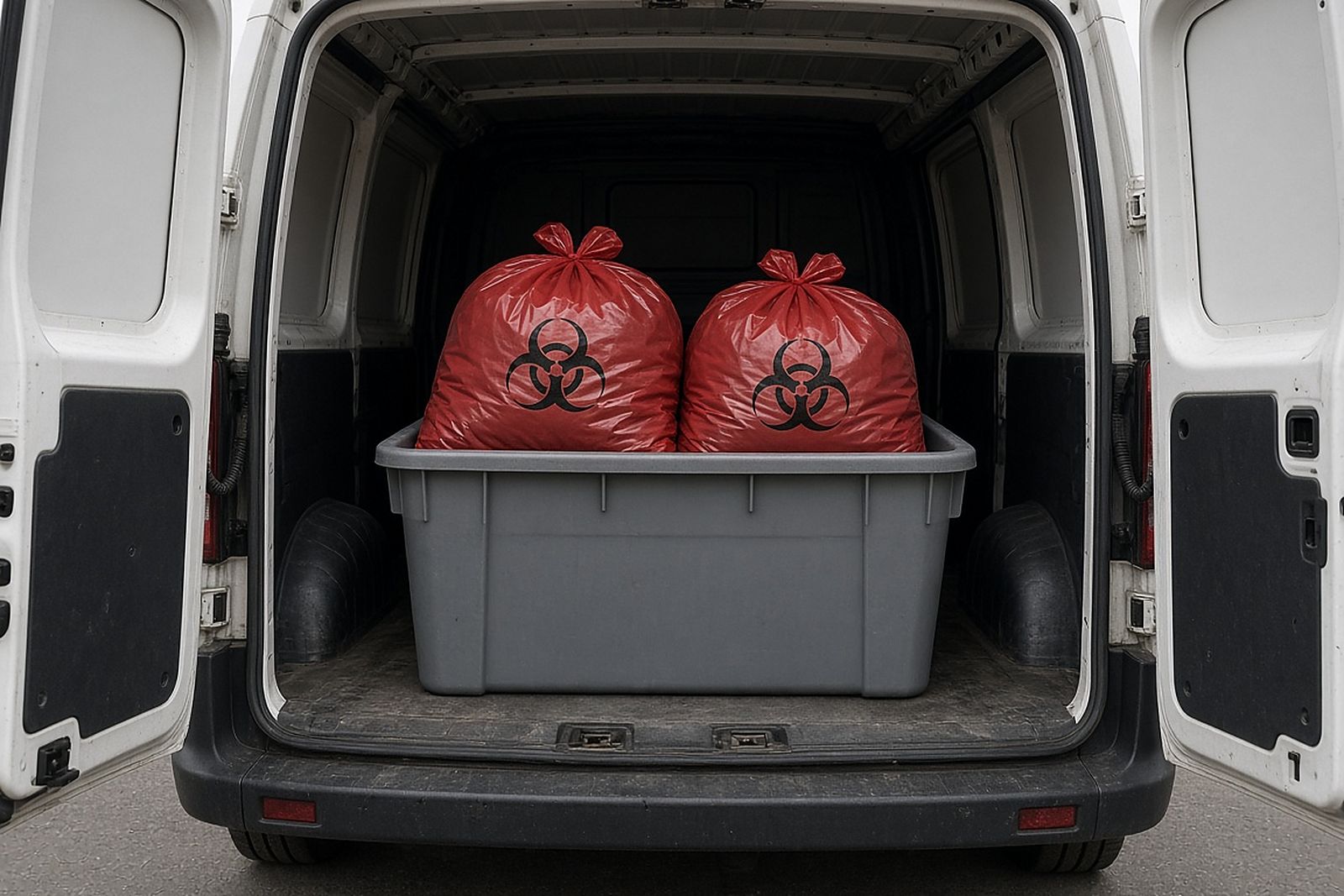
OSHA Regulations and Biohazard Waste Transport
OSHA protects the people who bag, box, and lift regulated medical waste, while DOT governs the truck. Learn which OSHA duties apply before your next pickup.
OSHA regulates the workers who handle medical waste, not the waste itself or the road trip. Its Bloodborne Pathogens standard covers containers, labels, training, vaccination, and exposure plans for anyone who packages or moves regulated waste on the job. Transport packaging and shipping papers fall under DOT, and treatment and disposal fall mostly under state agencies. You usually need to satisfy all three.
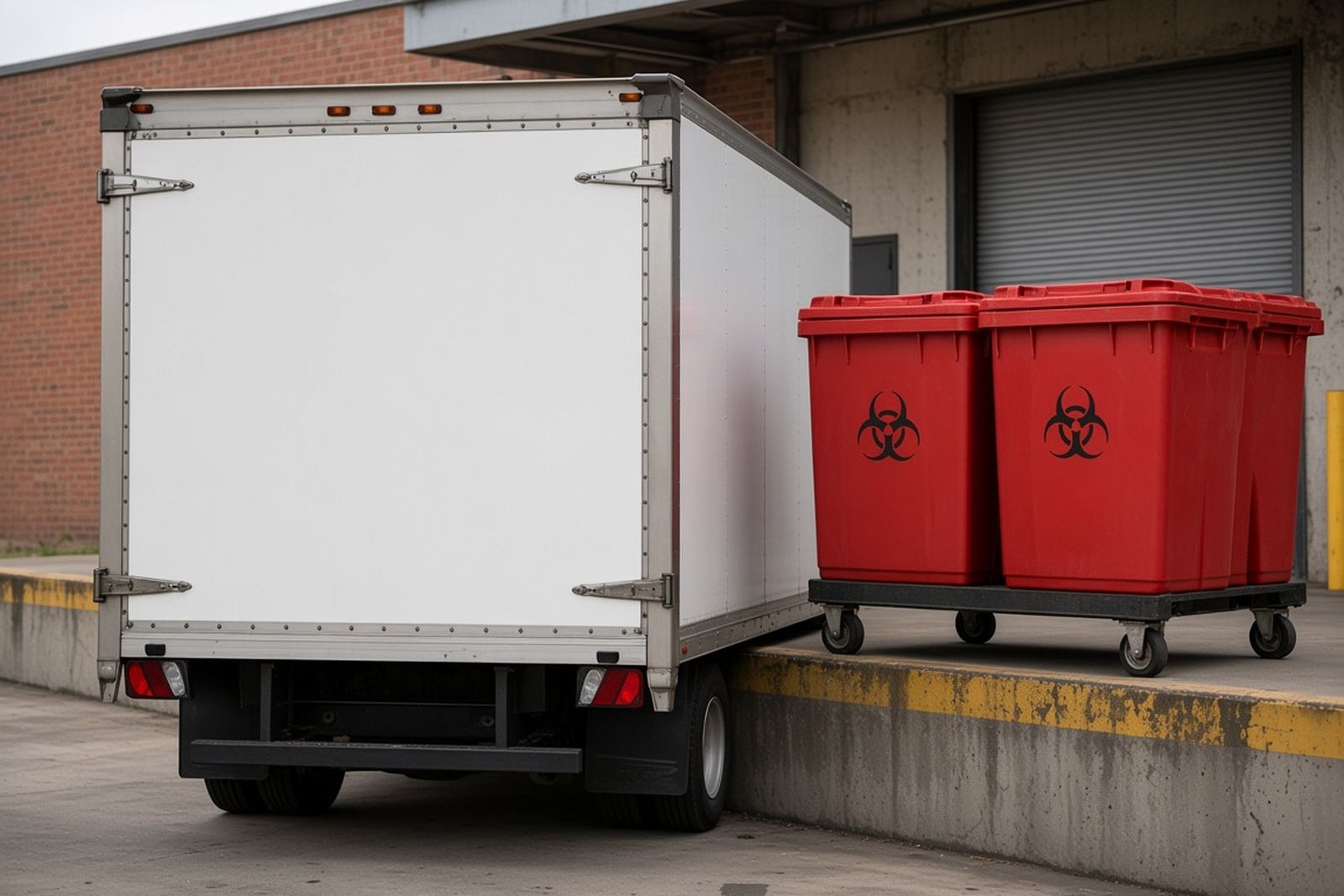
Which Federal, State, and Local Rules Apply to Biohazard Waste Transport?
Medical waste hauling falls under DOT shipping rules, OSHA worker rules and state programs that differ on permits and tracking. See how the layers fit together.
Biohazard waste hauling is governed in layers. Federal DOT rules control how waste is sorted and packed. They also cover labels, shipping papers, driver training and reporting accidents. OSHA protects the workers who handle the waste. States set most of the rest. They decide what counts as regulated medical waste and who needs to register or hold a hauler permit. They also set tracking forms, storage limits and approved treatment. Local agencies can add rules for storage, sites and disposal.

How to Research Waste Rules for Biohazard Waste Transport
Sort your waste streams first, then check EPA, your state program, and DOT shipping rules in order. A research method for medical waste generators and haulers.
To research waste rules for biohazard transport, start by listing every waste stream you generate, then check each against the right source: your state medical waste program for infectious waste, EPA's hazardous waste rules for chemicals and certain pharmaceuticals, and DOT's hazardous materials regulations for packaging and shipping. Read definitions and exclusions first, confirm unclear points with the agency, and record what you found.
Sourced figures on regulations
- 32.5%
32.5% reported reusing needles.
Read with care: Single hospital; self-report; adjusted associations, not intervention effects.
Source: Wu et al. (2025)1,810 insulin-treated outpatients in Enshi, China; 2023–2024; 30-day recall.
- 19.1%
19.1% of needles/devices were taken to healthcare facilities.
Read with care: Local health system and denominators by device use; not US disposal guidance.
Source: Corte-Real et al. (2022)1,436 adults with diabetes sampled through five Portuguese primary-care facilities.
- 90%
About 90% reported putting used sharps directly into household waste.
Read with care: Sample-specific knowledge classifications; cannot generalise to all China.
Source: Zan et al. (2024)334 people with diabetes in China.
These figures are public research and agency data, not this network's own job records. Keep each number with its population, year and limits; none of them predicts cost, timing or outcome at a specific property.
What research has found
Findings from published studies of people and properties in situations like this one. They describe what researchers observed in a specific group; they are not predictions for your case.
Fewer than one-fifth using injectable therapy recalled professional disposal advice.
Lower income was associated with greater adjusted odds of unsafe disposal.
Regulations: common questions
Does the federal government regulate medical waste the same way in every state?
Not entirely. Federal DOT rules set packing and shipping rules for hauling, and OSHA sets workplace protections. But the daily definitions of medical waste, and the duties of businesses that make it, come mostly from states. That is why the same box of waste can face different rules across state lines. Check your state program for the details that apply to you.
Do small generators need the same paperwork as hospitals?
Rules often scale with volume and waste type, and some states offer simpler options for small businesses. Even so, most must keep some record showing that waste left with an approved hauler and reached a permitted site. Ask your state agency what records apply to your volume. Keep copies organized in case of an inspection.
Who is responsible if a transporter violates the rules with our waste?
The hauler is responsible for its own violations. But you can still face questions if you chose a hauler without a permit or packed waste wrong. Your best protection is choosing a checked hauler, keeping complete shipping records, and following packing rules. If you suspect a problem, contact your state medical waste program and keep your records ready.
How do I find which agency runs my state's medical waste program?
Search your state environmental department and health department websites for medical waste or regulated medical waste. One of them usually runs the program, and sometimes both share duties. Your hauler can also tell you which agency issued its registration. If you are still unsure, call the state small business environmental help office. It can point you to the right contact.
Are tattoo studios covered by the same rules as medical offices?
Studios that make sharps and blood-soaked materials are generally treated as makers of regulated waste. Details vary by state and county, though. Body art is also often overseen by local health departments, which may add their own inspection rules. Check both your state medical waste program and your county health code. Keep records ready for either inspector.
What records might an inspector ask to see?
Inspectors often ask for your hauler agreement, shipping papers, treatment confirmations, and any state registration. They may also ask for your written waste steps and staff training records. Worker safety inspectors may ask for the written exposure plan and the sharps injury log. Keep these in one organized place, with separate sections for private records. That makes any visit go more smoothly.
Can rules change during my contract with a hauler?
Yes. States revise definitions, storage limits, and paperwork rules from time to time. Your contract does not freeze the rules. A good hauler will tell you about changes that affect your service. Watch for notices from your state program or trade group. At renewal, ask your hauler whether anything has changed that affects your containers or records.
Related community polls
Every count is a real visitor vote; nothing is seeded or padded. One vote per poll per device, and you can change your answer.
How does your business get medical waste off site now?
Which part of your waste program is most frustrating?
More on biohazard waste transport
Biohazard Waste Transport services
See how medical waste hauling works, from packing and shipping records to permitted treatment, before you sign with a hauler.
Costs explained
What drives the price, published cost ranges, and how to read a written quote line by line.
Insurance and payment
Which policies may respond, how to document a claim, and what to do if coverage is denied.
Planning tools
Use planners to estimate pickup costs, check haulers, sort waste, and organize records for your medical waste program before you commit.
Community polls
See how other clinics, studios, labs, and property owners handle pickup schedules, paperwork, and hauler choices. See where opinions differ from the written rules.
Knowledge quiz
Test what you know about who is responsible, container rules, shipping records, and proof of treatment. Then review the study guide for anything you missed.